Skip to content

trends

7 posts with the tag “trends”

Print On Demand in 2025: Practical Guide & Tactics

The world of print-on-demand (POD) has undergone significant transformations in recent years. What was once an easy-to-enter, low-competition model has evolved into a more nuanced and competitive arena. However, this evolution has also brought new opportunities for savvy entrepreneurs willing to embrace technology, creativity, and innovative approaches. In this article, we’ll explore the current state of POD in 2025 and offer actionable strategies to help small and medium-sized business owners thrive in this dynamic industry.

Is Print-on-Demand Still Worth It in 2025?

Section titled “Is Print-on-Demand Still Worth It in 2025?”

One of the most common questions among entrepreneurs considering POD is whether it is still a viable and profitable business model. The answer is both “yes” and “it depends.” The notion that POD is oversaturated often deters newcomers, but the reality is more complex. While certain niches and products - like custom dog mugs or generic t-shirts - are indeed saturated, untapped opportunities still exist for those who are willing to think outside the box.

Artificial intelligence (AI) has revolutionized the way entrepreneurs can identify and capitalize on unsaturated markets. Tools like ChatGPT can help generate fresh ideas for clever designs, slogans, or niche products that cater to specific audiences. For example, leveraging AI to brainstorm witty gardening-themed t-shirt slogans can uncover opportunities that might otherwise go unnoticed. Combine this with tools like Canva and AI-generated art, and the process of designing and testing new concepts becomes faster and more accessible than ever before.

The key takeaway? Avoid the temptation to copy popular, overdone designs. Instead, use AI to explore unique angles and underserved niches. In today’s POD landscape, creativity and originality are your greatest assets.

Profit Margins: Physical Products vs. Digital Products

Section titled “Profit Margins: Physical Products vs. Digital Products”

A recurring debate in the e-commerce world is whether POD is worth pursuing when compared to selling digital products, which boast higher profit margins. Let’s break down the math:

  • Print-on-Demand Margins: For example, a Bella Canvas 3001 t-shirt might cost $9.13 through a provider like Printify (with a premium account). Depending on the selling price (e.g., $18–$23), the profit margin can range from 27% to 49%. These margins are competitive when compared to traditional physical product businesses, which often have much lower profitability.
  • Digital Product Margins: Digital products, such as design bundles or e-books, can achieve margins of 70–90% since they incur minimal production or shipping costs. However, physical POD products are often perceived to have higher value due to their tangible nature, allowing for higher price points overall.

Ultimately, there’s no need to choose between the two. Many entrepreneurs find success by offering both physical and digital products in their online stores, creating a diversified income stream.

Marketing POD in 2025: Do You Need Paid Ads?

Section titled “Marketing POD in 2025: Do You Need Paid Ads?”

One of the most persistent myths about POD is that paid advertising is required to drive traffic and generate sales. While ads can indeed be a powerful tool, they are far from the only option. In fact, many successful POD businesses thrive using low-cost or free marketing strategies that leverage organic traffic.

  1. Instagram Reels and TikTok Videos: Short video content can go viral and drive significant traffic to your store. For example, a store selling car stickers might film short clips showcasing their products being applied to vehicles.
  2. Content Marketing: Creating meme-style posts or carousel image slides related to your niche can generate engagement and build a loyal audience. For instance, stores targeting accountants or gardeners can share humorous, relatable content that resonates with their target market.
  3. Search Engine Optimization (SEO): Optimizing your Etsy or Shopify store for search engines can result in long-term, passive traffic. Ranking for niche-specific keywords like “funny gardening t-shirts” can help your store appear on the first page of search results, driving organic sales.

Free and low-cost strategies require more time and effort than paid ads, but the long-term benefits - such as a loyal customer base and consistent website traffic - often outweigh the upfront investment.

Time Management and Product Quality: Minimizing Operational Stress

Section titled “Time Management and Product Quality: Minimizing Operational Stress”

One critique of POD is that it isn’t as passive as initially advertised. Many store owners find that managing customer inquiries, complaints, and returns can be time-consuming. However, much of this stress can be minimized by focusing on two key areas: product quality and operational efficiency.

The quality of your POD products can vary significantly depending on the print provider you choose. For example, a previous comparison of providers revealed that while Monster Digital produced vibrant, high-quality prints, other providers like Fulfill Engine struggled with consistency. Ordering samples of your designs before launching them in your store is a crucial step to ensure customer satisfaction and reduce the number of complaints.

Even with quality assurance, customer inquiries are inevitable. The good news is that automating parts of your support process can save time. For instance:

  • Use FAQ sections to address common questions.
  • Implement autoresponders for email inquiries.
  • Focus on clear communication during the order process (e.g., shipping timelines) to reduce confusion.

By prioritizing quality and efficiency, you can turn your POD store into a business that requires minimal daily oversight.

  • Innovation is essential: Avoid saturated markets and use tools like AI to discover unique niches and create compelling designs.
  • Maximize profitability: While physical products have lower margins than digital ones, they can still generate higher profits per sale due to perceived value.
  • Marketing doesn’t have to break the bank: Leverage free and low-cost strategies such as Instagram Reels, TikTok videos, memes, and SEO to generate organic traffic.
  • Quality matters: Choose your print providers carefully and invest in quality control to ensure customer satisfaction.
  • Time management is key: Automate processes wherever possible and create systems to handle customer inquiries efficiently.

The print-on-demand industry in 2025 is far from dead. Instead, it offers a wealth of opportunities for entrepreneurs who are willing to adapt, innovate, and embrace modern tools and strategies. By focusing on niche markets, leveraging AI for creative ideation, and utilizing cost-effective marketing methods, you can build a thriving POD business.

The future of POD may not look like the past, but for business owners ready to evolve with the times, the potential for success has never been greater. Start exploring new possibilities, and let your creativity pave the way to sustainable growth in the digital age.

Source: “Is Print On Demand Still Worth It In 2025?” - Wholesale Ted, YouTube, Aug 19, 2025 - https://www.youtube.com/watch?v=3lx4sXDvmoU

Use: Embedded for reference. Brief quotes used for commentary/review.
Social Media Demographics Trends for POD Businesses

In 2025, social media is a key driver for Print-on-Demand (POD) businesses, with 62.6% of the global population active on these platforms and users spending an average of 2 hours and 21 minutes daily. Knowing where your audience is and how they interact is crucial for success. Here’s what you need to know:

  • Top Platforms: Facebook (3.065B users) leads in direct purchases, Instagram (2B users) excels in product discovery, and TikTok (2B users) dominates Gen Z engagement. YouTube has become the most-used platform in the U.S.
  • Demographics Matter: Millennials (69.2% active) and Gen Z (63% use TikTok for discovery) are key groups. Each platform has unique age and gender dynamics.
  • Content Trends: Short-form video is king, with vertical videos achieving 90% higher completion rates. Platform-specific content, like TikTok’s creative videos or Pinterest’s searchable pins, drives engagement.
  • AI Tools: Automating content creation, scheduling, and real-time adjustments saves time and boosts results. Tools like Print2Social simplify targeting and improve efficiency.
  • Emerging Trends: Private communities, social commerce, and AI integration are reshaping marketing strategies. Social search is growing, with platforms competing with traditional search engines.

Key Takeaway: POD businesses must use platform-specific strategies, leverage AI for efficiency, and stay ahead of shifting trends to connect with their target audiences effectively.

BusinessGuide360.com

Major Social Media Platforms and Their Demographics in 2025

Section titled “Major Social Media Platforms and Their Demographics in 2025”

For print-on-demand (POD) businesses, tailoring content to match the audience of each social media platform can significantly boost engagement and sales. By understanding the demographics of these platforms, POD businesses can fine-tune their strategies to connect with their ideal customers.

Each social media platform attracts distinct audiences based on age, gender, and how users interact with content. These differences directly influence product discovery and purchasing behavior.

Platform

Monthly Users

Largest Age Group

Gender Split

POD Benefit

Facebook

3.065 billion

25–34 (31.1%)

56.8% Male, 43.2% Female

Direct purchases (39% of social buyers)

Instagram

2 billion

18–24 (31.7%)

50.6% Male, 49.4% Female

Product discovery (61% of users)

TikTok

2 billion

25–34 (35.3%)

55.7% Male, 44.3% Female

Product discovery (77% of Gen Z users)

Pinterest

553 million

18–24 (46%)

69.4% Female, 22.6% Male

Brand discovery (80% of weekly users)

YouTube

2+ billion

25–34 (21.7%)

54% Male, 46% Female

Long-form product showcases

These insights provide a foundation for creating platform-specific content that aligns with user preferences and behaviors.

Short-form video is dominating the social space, with vertical videos achieving 90% higher completion rates compared to horizontal formats. However, each platform has its own content style that resonates with its audience:

  • Facebook: Focus on community-driven posts and direct sales strategies. With 39% of consumers making purchases directly on Facebook and organic reach averaging only 2.2%, targeted ads are crucial.
  • Instagram: Visual storytelling thrives here. High-quality product photos, behind-the-scenes content, and user-generated posts (seen as 2.4 times more relatable) perform well. Organic reach is around 9.5%.
  • TikTok: Creativity and authenticity are key. Short videos that educate, entertain, or inspire while showcasing products in real-life scenarios tend to succeed. TikTok’s algorithm favors content that holds viewers’ attention.
  • Pinterest: This platform acts as a visual search engine. Optimizing pins with relevant keywords, alt text, and clear captions improves product visibility.
  • YouTube: Ideal for detailed product demonstrations, tutorials, and brand storytelling. Longer videos work well for showcasing the design process or sharing customer testimonials.

“In 2025, we’ll see brands begin to shun big name influencers in favor of nurturing their communities. Brands are going to invest more in nurturing relationships with loyal customers, loyal followers, the people that are always logging in to engage with them or watch their videos and stories and we’re going to see more collaborative content.”
– Alison Battisby, Founder of Avocado Social and DMI Lecturer

As social media continues to evolve, new platforms and trends are reshaping how businesses connect with their audiences.

Emerging platforms and shifting trends are opening up fresh opportunities for POD businesses:

  • Threads: Positioned as a text-based platform, Threads offers a chance for businesses to establish an early presence as users explore new social experiences.
  • AI Integration: Over 80% of marketers report that AI tools save time and improve workflows. For POD businesses, AI can assist with content creation, scheduling, and social listening while maintaining a consistent brand voice.
  • Social Commerce: With social media ad spending projected to hit $276.7 billion in 2025, platforms are becoming essential shopping hubs. Stores with active social accounts see 32% higher sales compared to those without.
  • Private Communities: These spaces are gaining traction for fostering deeper customer relationships. Sixty-six percent of branded communities report improved customer retention, and 76% of internet users participate in online groups.
  • Social Search: Social platforms are increasingly competing with traditional search engines. In February 2025, 94.4% of internet users visited social networks, compared to 82.3% using search engines. Optimizing posts with hashtags, keywords, and searchable captions is now a must.
  • Authenticity and Community: Consumers are prioritizing authentic connections, with 90% valuing honesty when choosing brands. Engagement rises by 28% when brands mix user-generated content with their own.
Section titled “How Demographic Trends Change POD Marketing Strategies”

With 5.24 billion active social media users and 94.2% of internet users engaging on these platforms, print-on-demand (POD) businesses can no longer rely on generic, one-size-fits-all strategies. Instead, they need to focus on connecting with audiences where they spend their time online. Today’s consumers are more selective about the brands they follow and the content they engage with, pushing businesses to adopt more deliberate and platform-specific marketing approaches.

Using Multiple Platforms to Reach Different Audiences

Section titled “Using Multiple Platforms to Reach Different Audiences”

People now interact across a variety of platforms, and this shift calls for POD businesses to rethink single-platform strategies. Instead, they need tailored approaches to reach different demographic groups. For instance, Millennials, who remain highly active online, often use multiple platforms for different purposes. They might discover products on Instagram, finalize their purchasing decisions on Facebook, and turn to TikTok for customer support or reviews.

Each platform has its own audience dynamics, so businesses need to craft strategies that match the preferences of these users while maintaining a cohesive brand identity. As part of this shift, video content has become a key tool for engaging audiences across platforms.

Video continues to dominate social media, with platforms like TikTok and YouTube leading the charge. TikTok users spend an average of 47 minutes a day on the app, while YouTube users clock in at 49 minutes daily. This creates a significant window for POD brands to showcase their products in engaging ways. High-quality, authentic video content can highlight product features, share behind-the-scenes looks at production, and tell compelling brand stories.

Platforms like TikTok and Instagram thrive on relatable and visually appealing videos, making them ideal for demonstrating the quality and uniqueness of POD products. Whether it’s a quick tutorial, a customer testimonial, or a sneak peek into the design process, video content helps build trust and capture attention.

Focusing on Niche Communities and Specific Interests

Section titled “Focusing on Niche Communities and Specific Interests”

In addition to leveraging broad platforms and video trends, targeting niche communities can significantly enhance marketing efforts. Many consumers are moving away from large, general platforms and gravitating toward spaces where they can connect with others who share their interests.

By focusing on specific communities, POD businesses can foster deeper connections and build trust, which often translates into loyal customers and higher returns on investment. For example, campaigns tailored to LGBTQ+ audiences or pet lovers have shown that personalized messaging resonates more strongly and drives better engagement.

Identifying groups that align with a brand’s products and values is crucial. Whether it’s dog lovers, coffee aficionados, or fitness enthusiasts, creating products and marketing messages that speak directly to these communities often yields better results than generic approaches. This strategy allows businesses to stand out and build meaningful relationships with their audience.

Using AI Tools for Social Media Demographics

Section titled “Using AI Tools for Social Media Demographics”

Juggling multiple social platforms while keeping up with ever-changing audience demographics can feel like an uphill battle for POD (Print-on-Demand) business owners. Thankfully, AI tools are stepping in to make this process far more manageable by providing insights that save time and effort.

In fact, 63% of US B2B marketers in 2023 attributed AI to improving their revenue and lead generation efforts. Let’s explore how AI simplifies targeting, scheduling, and real-time adjustments to maximize social media engagement.

AI tools shine when it comes to analyzing demographic data and creating content that connects with specific audience groups. By tapping into platform-specific demographics, trending topics, and user behavior, these tools can craft content that feels tailored and relevant. For example, brands using AI for social media management have reported cutting content creation time in half, and personalized recommendations have been shown to increase engagement by up to 60%.

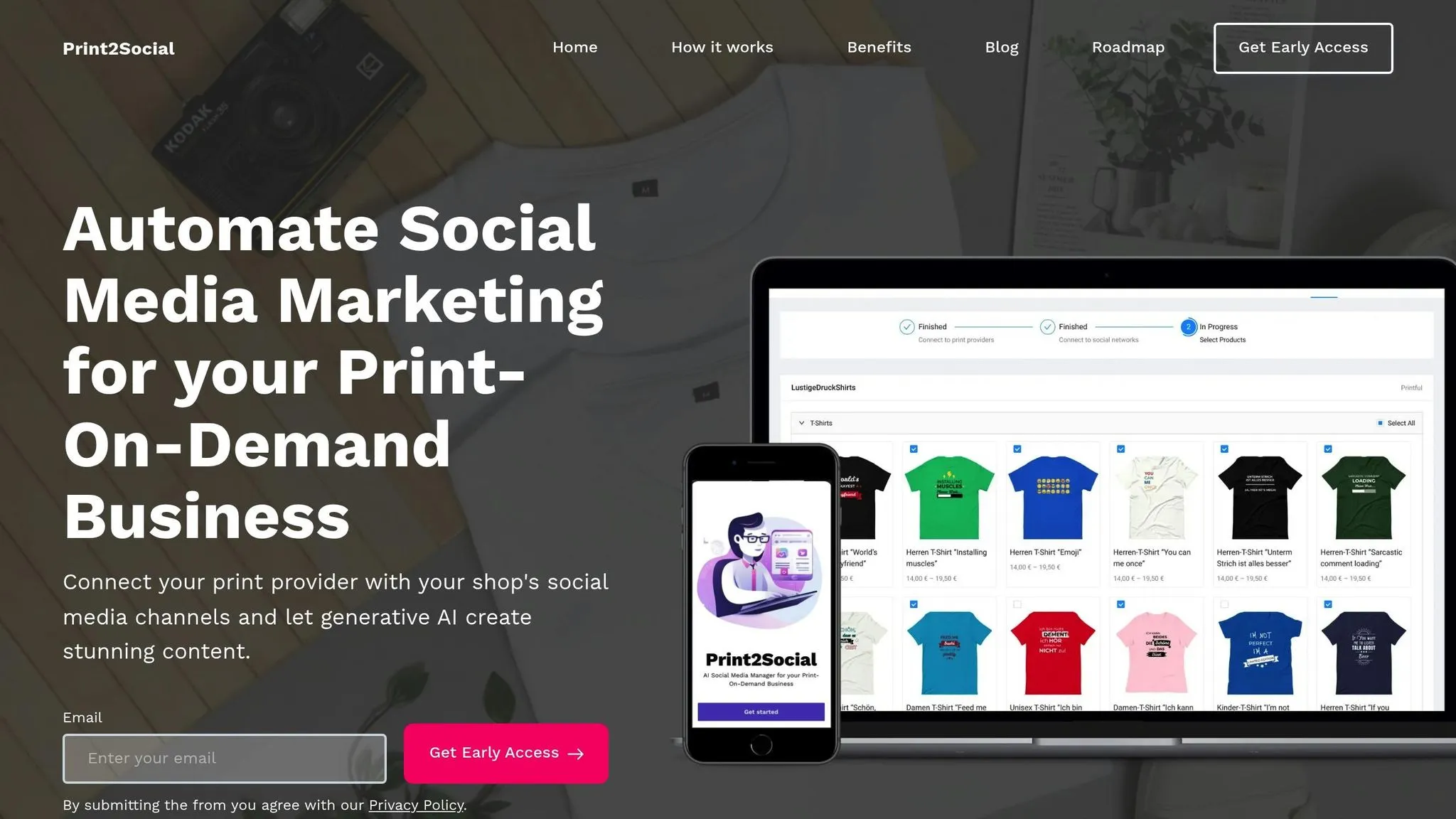
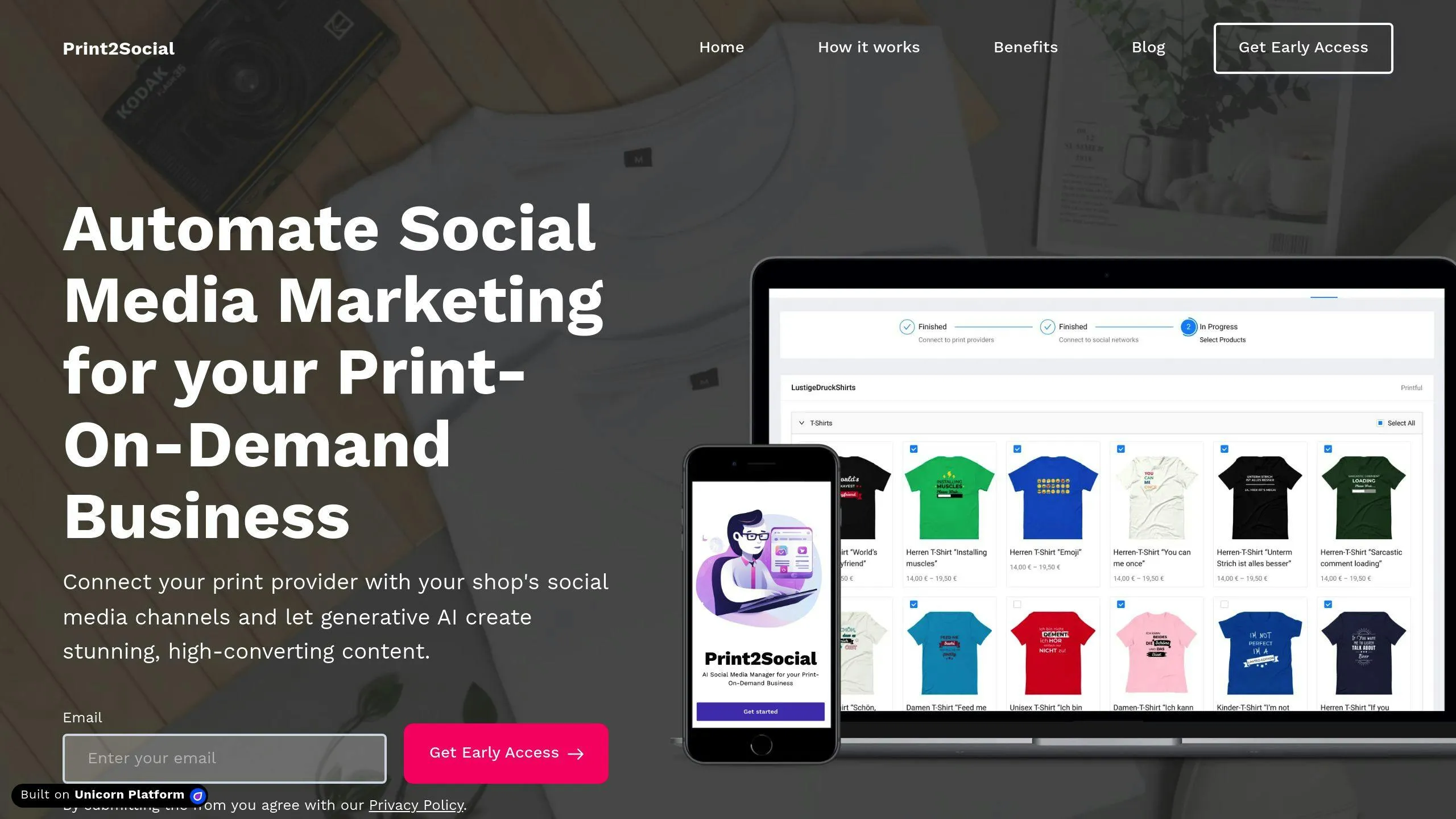
A standout example of this is Print2Social, a platform that links directly to POD providers and social accounts to automate content creation. It evaluates your products and generates custom images and videos designed to suit the preferences of each platform. Think of dynamic, fast-paced videos for TikTok’s younger crowd versus polished, informative posts for Facebook’s broader audience.

Another great illustration is Heinz’s “Draw Ketchup” campaign in 2023. By using an AI-powered image generator to produce visuals for social media and print ads, the campaign racked up over 850 million impressions worldwide.

Managing Multiple Platforms with Scheduling

Section titled “Managing Multiple Platforms with Scheduling”

AI doesn’t just help create content - it ensures it’s delivered at just the right time. Managing a consistent presence across various platforms becomes easier with AI scheduling tools. These tools analyze when your audience is most active on each channel and adjust posting times accordingly. More than 55% of global influencers say AI has made their workflows faster and more efficient.

Platforms like Print2Social take this further by automating the scheduling process while adapting each post to maintain the unique tone of each platform. This frees up time for POD business owners to focus on product development and customer service. Businesses using AI in their marketing strategies have also reported savings of up to 37%.

One of AI’s most impactful abilities is processing real-time data to fine-tune strategies on the go. Companies that incorporate real-time insights into their advertising efforts have seen up to a 20% boost in returns on marketing investments. For instance, Naomi Simson, the owner of RedBalloon, leveraged AI for targeting, testing, and ad budgeting, slashing marketing costs by 25% and achieving a staggering 3,000% return on ad spend.

AI tools continuously monitor engagement rates, demographic shifts, and emerging trends. With global data volumes reaching around 44 zettabytes daily in 2020 and growing rapidly, these insights allow POD businesses to stay ahead of the curve. They can quickly adjust content strategies and refine targeting methods, ensuring their messaging remains relevant.

“The future of social media is AI-powered, and the brands that embrace this technology will be the ones that thrive in the years to come.” - Ragy Thomas, CEO of Sprinklr

Section titled “Keeping Up with Social Media Demographics Trends”

The social media world doesn’t stand still. With a large portion of the global population actively engaging on social platforms daily, it’s clear that trends shift fast. For POD (Print-On-Demand) businesses, this means staying aware of where your customers spend their time and how they interact online. To keep up, you need reliable data and a flexible marketing strategy that evolves as quickly as your audience does.

Having access to accurate, up-to-date data is key to making informed decisions. Trusted platforms like Sprout Social, DataReportal, Pew Research Center, and Statista are excellent resources for understanding demographic shifts and usage trends. For instance, DataReportal aggregates information from sources like the Global Web Index to provide a detailed picture of how people are using social platforms.

But don’t stop there. Your own analytics can reveal patterns specific to your audience. Tools like Facebook Insights, Instagram Analytics, and TikTok Analytics offer detailed demographic breakdowns, helping you spot shifts that may not align with broader market trends. Social listening tools are another valuable resource - they track conversations about your products and industry, providing early insights into emerging trends. For POD businesses, these tools are invaluable for aligning your product promotions with customer interests as they evolve.

The US market offers a mix of opportunities and challenges for POD businesses. For example, YouTube has now overtaken Facebook as the most-used social platform in the United States. This shift highlights the growing importance of video content in your marketing strategy. But it’s not just about the platform - it’s also about the approach.

American audiences often prefer brands that feel relatable and authentic. They respond well to behind-the-scenes content, user-generated posts, and brands that address social issues openly. To connect with this audience, focus on storytelling that ties your products to real-life experiences. Humor, seasonal content tied to holidays like Halloween and Christmas, and designs that celebrate regional pride can also boost engagement.

Tools like Print2Social make it easier to tailor your content for different platforms. For example, a Halloween campaign can feature fast-paced, attention-grabbing videos on TikTok while offering more polished, lifestyle-oriented content on Facebook - all while maintaining a consistent brand voice.

Social media moves fast, and so should your marketing strategy. Businesses that incorporate real-time insights into their campaigns can see up to a 20% boost in their marketing ROI. For POD businesses, this means constant testing and refinement to keep up with changing audience behaviors.

A/B testing is a great way to figure out what works best. Experiment with content types, posting times, hashtags, and visuals. Measure engagement, follower growth, and conversion rates to determine what’s effective. The 70:20:10 rule is a helpful guideline: dedicate 70% of your content to proven strategies, 20% to refining those strategies, and 10% to trying out new ideas.

If you notice a demographic shift - like a surge in younger users - it might be time to adjust your design style and messaging to better connect with that audience.

Real-time data analysis can also help you jump on trending topics and viral moments. If you see a spike in engagement around a specific event or theme, quickly create content that links your POD products to that trend. This kind of agility can make a big impact during busy shopping seasons or cultural moments. AI tools can simplify this process, helping you adapt your strategy in real-time and stay ahead of the curve.

Conclusion: Using Demographics for POD Success

Section titled “Conclusion: Using Demographics for POD Success”

Grasping social media demographics is crucial for the survival and growth of print-on-demand (POD) businesses in 2025. As of January 2025, 246 million Americans - about 72.5% of the population - are active on social media, spending an average of 2 hours and 8 minutes daily on these platforms. This vast audience offers an incredible opportunity for POD businesses to connect with potential customers where they already spend their time.

The data reveals some valuable insights for targeting. Millennials continue to dominate as the most active users, while Gen Z females spend nearly 3 hours daily online. Notably, 77% of Gen Z users rely on TikTok for discovering products, and 61% of Instagram users use the platform for making purchases.

Platform preferences are also evolving. YouTube has now surpassed Facebook as the most popular platform in the U.S.. However, Facebook still leads in driving direct purchases at 39%, followed by TikTok at 36% and Instagram at 29%. With U.S. social commerce sales projected to exceed $90 billion in 2025, these platforms are essential for effective POD marketing strategies.

It’s not just about volume when it comes to content. Quality and meaningful engagement resonate more with audiences than a barrage of posts. Social media users today value authentic interactions with brands, which opens the door for POD businesses to build stronger, more genuine relationships with their customers through thoughtful and creative content. These demographic insights provide a roadmap for businesses aiming for long-term success.

Armed with these insights, POD businesses need to refine their strategies to meet changing consumer expectations. The POD industry is expanding at a 26% compound annual growth rate (CAGR), with average profit margins hovering around 20%. Additionally, shifting consumer priorities offer new opportunities - 80% of consumers now express a willingness to pay more for sustainable products.

To stay competitive, POD businesses must embrace AI-driven tools to keep pace with rapid changes in demographics and consumer behavior. Tools like Print2Social can help businesses remain agile, enabling them to automate cross-platform content creation and scheduling. This ensures that content is tailored to the unique preferences of each platform while saving significant time and effort.

The key to thriving in this evolving landscape is adaptability. Social media demographics will continue to shift, and new platforms will emerge. POD businesses that invest in real-time data analysis and AI-powered automation will be better equipped to respond to these changes. With 132.7K monthly searches for “print-on-demand” globally, the growing interest in the industry underscores the importance of staying flexible and responsive to consumer demands.

How can Print-on-Demand businesses use AI tools to improve their social media marketing?

Section titled “How can Print-on-Demand businesses use AI tools to improve their social media marketing?”

How AI Tools Can Boost Social Media Marketing for POD Businesses

Section titled “How AI Tools Can Boost Social Media Marketing for POD Businesses”

Print-on-Demand (POD) businesses can take advantage of AI tools to simplify and improve their social media marketing efforts. Platforms like Print2Social are designed to handle tasks like creating eye-catching promotional images and videos, scheduling posts at the best times, and directly linking with POD providers and social media accounts. The result? Less time spent on repetitive tasks and more consistent, far-reaching campaigns.

On top of that, AI tools can analyze trends, recommend tailored content, and support social listening to ensure your marketing stays fresh and engaging. These features allow POD businesses to focus on building their brand while keeping their social media presence active and impactful.

Section titled “What social media demographic trends should POD businesses focus on in 2025?”

In 2025, Gen Z and Millennials will continue to dominate social media, shaping trends and driving engagement. Platforms like YouTube, Instagram, TikTok, and X will remain their go-to spaces for connection and content. Among these groups, young women aged 16 to 24 stand out, actively engaging with an average of 7–8 platforms each month. Millennials aren’t far behind, with nearly 70% regularly using social media.

For print-on-demand businesses, this means one thing: creating visually appealing and relatable content is essential. To capture the attention of these younger audiences, focus on designs and products that feel genuine and align with their interests. Social media is the perfect stage to showcase your brand and turn engagement into sales.

How do short-form videos on TikTok and Instagram impact product discovery and engagement for print-on-demand businesses?

Section titled “How do short-form videos on TikTok and Instagram impact product discovery and engagement for print-on-demand businesses?”

Short-Form Videos: A Powerful Tool for POD Businesses in 2025

Section titled “Short-Form Videos: A Powerful Tool for POD Businesses in 2025”

Platforms like TikTok and Instagram have completely transformed how products are discovered and how brands engage with consumers. For print-on-demand (POD) businesses, short-form videos are a golden opportunity to showcase products in quick, eye-catching ways that leave a lasting impression.

Here’s the deal: Over half of Gen Z now finds products through TikTok and Instagram. That makes these platforms a must for connecting with younger, tech-savvy shoppers. Short videos not only spark viral moments but also create genuine connections by sharing relatable stories and tapping into niche communities. For POD brands, it’s the perfect way to spotlight unique designs, demonstrate how products are used, or even offer a behind-the-scenes look. These videos don’t just grab attention - they build trust and drive sales.

How AI Predicts 2025 Print-on-Demand Fashion Trends

AI is transforming the print-on-demand fashion industry by helping businesses predict trends, reduce waste, and increase sales. Here’s how AI makes it happen:

  • Trend Forecasting: AI analyzes social media, e-commerce, and search data to identify emerging fashion trends.
  • Design Creation: Tools like generative AI suggest color palettes, patterns, and styles based on consumer preferences.
  • Marketing Automation: Platforms like Print2Social automate content creation, generating images, videos, and posts to keep brands visible.
  • Production Planning: AI optimizes inventory, prioritizes popular designs, and aligns production with seasonal demand.

Google Gemini Advanced

Data Sources That Power AI Fashion Predictions

Section titled “Data Sources That Power AI Fashion Predictions”

AI taps into a variety of data streams to sharpen trend predictions, which play a crucial role in shaping print-on-demand strategies.

Social media platforms provide a treasure trove of real-time insights into consumer preferences, complementing traditional trend analysis. AI tools scan millions of posts daily, analyzing visual content and engagement metrics to spot emerging fashion trends. Here’s a closer look at how key platforms contribute:

Platform

Key Data Points

Trend Indicators

Instagram

Post engagement rates

Popular color choices

TikTok

Video view patterns

Trending design elements

Pinterest

Save and share metrics

Seasonal style shifts

For example, Print2Social uses AI-driven insights from these platforms to help print-on-demand businesses craft content aligned with current fashion preferences. By analyzing engagement data, it identifies the best times to post and the types of content that perform well.

But social media isn’t the only source of trend clues - online shopping behavior adds another layer of understanding.

E-commerce platforms reveal a wealth of information about consumer buying habits. AI systems track metrics like view-to-purchase ratios, cart abandonment rates, and category growth, as well as seasonal purchasing trends.

This data is invaluable for print-on-demand businesses, as it highlights which designs and products are likely to gain traction. By identifying these shifts early, businesses can stay ahead of the curve and meet demand before trends hit their peak.

Search engine data offers another lens into consumer interests. AI systems monitor search behavior to uncover what shoppers are actively seeking. Key metrics include:

Search Metric

Business Impact

Search volume trends

Highlights emerging design themes

Geographic distribution

Uncovers regional style preferences

Related keyword growth

Detects new style combinations

Applying AI Predictions to Print-on-Demand Business

Section titled “Applying AI Predictions to Print-on-Demand Business”

AI is transforming how print-on-demand businesses create designs by analyzing trends from social media, e-commerce platforms, and search data. These insights help pinpoint design elements that are likely to appeal to customers. On top of that, modern AI tools can generate mockups and lifestyle images, making it easier to envision how designs will look in real-world settings.

Design Element

AI Prediction Method

Business Application

Color Palettes

Social media engagement analysis

Develop seasonal collections

Pattern Types

Search trend monitoring

Create themed designs

Style Elements

E-commerce purchase data

Plan product variations

This approach doesn’t just stop at design creation - it extends into digital marketing as well.

Print2Social

Print2Social is redefining how print-on-demand businesses handle social media marketing. Powered by AI-driven automation, this platform connects directly to POD providers and social media accounts, simplifying the entire promotional process. Here’s what it does: for every product, Print2Social generates 12 images, 8 video clips, and 20 posts.

This robust content creation ensures businesses maintain a steady social media presence while staying in step with current fashion and design trends. The generated content includes a mix of promotional, educational, and engagement-focused posts, keeping audiences engaged and interested.

But the benefits of AI don’t stop at marketing. It also plays a key role in refining production strategies.

When social media tasks are automated, businesses gain more time to focus on production planning. AI insights make this process more strategic and data-driven. Here’s how businesses can use AI to optimize their operations:

Planning Aspect

AI Implementation

Business Benefit

Inventory Forecasting

Trend prediction analysis

Minimize overstock risks

Design Prioritization

Engagement metrics tracking

Concentrate production on popular designs

Seasonal Planning

Historical data analysis

Allocate resources more effectively

Common Issues and Solutions in AI Trend Analysis

Section titled “Common Issues and Solutions in AI Trend Analysis”

Accurate trend predictions start with reliable data. To achieve this, businesses should:

  • Pull data from a variety of sources and keep it updated by cross-checking with trusted industry references.
  • Ensure data consistency by integrating pipelines from platforms like social media, e-commerce, and search analytics.
  • Confirm trends by systematically cross-referencing multiple data points.

For print-on-demand businesses, staying ahead of market shifts is vital. Tools like Print2Social’s AI-powered platform can help by:

  • Identifying spikes in keyword usage.
  • Tracking engagement within specific categories.
  • Spotting emerging style and color preferences.

Reacting quickly to these insights allows businesses to stay nimble and better prepared for ongoing market evaluations.

After adapting to market changes, it’s equally important to keep a close eye on performance to ensure AI predictions stay accurate. Effective strategies include:

  • Comparing predicted trends with actual outcomes, such as sales conversion rates and customer interactions.
  • Monitoring both short-term metrics (like daily sales changes) and long-term patterns (such as seasonal trends).
  • Leveraging real-time analytics to pinpoint areas for improvement and refine forecasting models.

Print2Social’s analytics dashboard consolidates these insights, offering real-time updates that help businesses fine-tune their strategies effectively.

As we’ve explored, AI isn’t just a buzzword - it’s a game-changer for businesses, especially in the fast-paced world of print-on-demand fashion. By tapping into AI-driven trend forecasting and automation, companies can make smarter decisions and operate more efficiently.

With automated platforms taking over repetitive tasks, business owners can shift their focus to big-picture strategies, like innovative designs and long-term planning. But AI’s role doesn’t stop at predicting trends. It also helps brands stay consistently active and relevant by managing diverse content creation with ease.

What makes AI truly impactful is its ability to scale operations without sacrificing quality. Whether you’re managing a handful of designs or an extensive catalog, AI ensures consistency and efficiency. To unlock its full potential, businesses should:

  • Automate Repetitive Tasks: Delegate tasks like content creation and scheduling to AI, freeing up time for creative and strategic efforts.
  • Use Data to Guide Decisions: Rely on AI-generated insights to shape design choices and marketing campaigns.
  • Maintain Brand Consistency: Let AI handle diverse content production while keeping your brand’s identity intact.

The future of the fashion industry will belong to those who embrace AI’s capabilities. By blending trend forecasting with automated marketing, businesses can set themselves up for lasting success in the ever-evolving market of 2025 and beyond.

Section titled “How does AI analyze social media data to forecast fashion trends for print-on-demand businesses?”

AI uses powerful algorithms to sift through massive amounts of social media data, such as trending hashtags, popular posts, and user engagement. By spotting patterns in colors, designs, and styles that are resonating online, it can accurately forecast upcoming fashion trends.

For print-on-demand businesses, this kind of insight is a game-changer. It allows you to stay ahead by designing products that align with what’s currently popular. Tools like Print2Social take it a step further by integrating these trends into your marketing content, helping you connect with your audience more effectively and boost sales.

How can AI tools like Print2Social improve marketing and planning for print-on-demand fashion businesses?

Section titled “How can AI tools like Print2Social improve marketing and planning for print-on-demand fashion businesses?”

AI-powered tools like Print2Social make marketing and production planning easier for print-on-demand fashion businesses by automating essential tasks. It connects directly with your fulfillment providers and social media accounts, simplifying the process of creating and scheduling promotional content.

Thanks to its generative AI features, Print2Social can produce high-quality images and short videos customized for your products. It can generate up to 20 unique social media posts per item, saving you time while keeping your branding consistent. Plus, it helps you stay on top of trends so you can focus on growing your business.

How can print-on-demand businesses trust AI trend predictions and quickly respond to market changes?

Section titled “How can print-on-demand businesses trust AI trend predictions and quickly respond to market changes?”

AI-powered trend predictions can be a game-changer when paired with a forward-thinking strategy. To get the most accurate insights, businesses should rely on AI tools that pull data from a variety of sources, like social media trends, customer behavior patterns, and industry reports. Keeping a close eye on these insights on a regular basis can help you anticipate and respond to new market demands.

Speed and adaptability are key. Prioritize flexibility in both your production processes and marketing strategies. For instance, tools like Print2Social make it easier to react to trends by automating the creation and scheduling of promotional content based on popular designs. By using AI tools effectively and staying informed, you can align your products and campaigns with shifting market trends and customer needs.

Which Platform Is The Easiest for Growing Followers in 2025

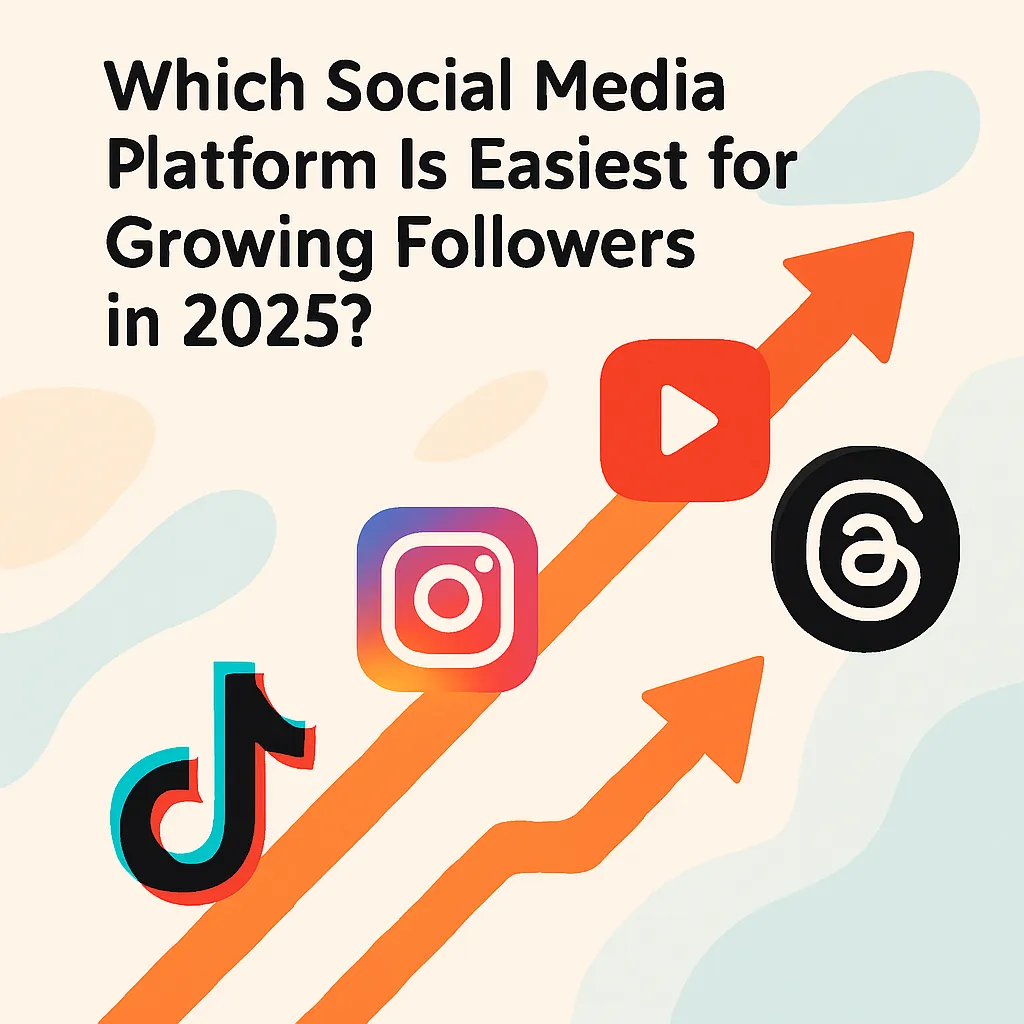
TikTok emerges as the clear frontrunner for ease of follower growth in 2025, with its algorithm design and engagement metrics significantly outpacing competitors. While each platform offers unique advantages for different types of content creators, the data strongly indicates that new accounts can gain traction fastest on TikTok, followed by Instagram, with other platforms presenting greater challenges for organic growth.

TikTok continues to dominate as the platform where gaining followers is most accessible, particularly for new accounts with no established audience. This advantage stems from several key factors that make the platform uniquely positioned for rapid growth:

TikTok’s algorithm stands apart from other platforms by focusing primarily on content quality rather than account size. Unlike platforms that prioritize existing popularity, TikTok’s For You Page can propel unknown creators to viral status overnight. The platform is explicitly designed to “promote content based on engagement rather than follower count, making it possible for anyone to go viral”.

This algorithmic approach means that a compelling video from a brand-new account has nearly the same chance of being seen as content from established creators. As one analysis directly states, “It’s easier to grow and go viral on TikTok because its algorithm favors content that engages users regardless of the creator’s follower count”.

The numbers strongly support TikTok’s position as the growth leader. In 2025, TikTok maintains an organic engagement rate of 2.50%, dramatically outperforming Instagram (0.50%) and Facebook/X (both at 0.15%). This engagement advantage translates directly to faster follower acquisition.

Additionally, TikTok posts generate substantially more interaction, averaging “66 comments each, representing a 73% increase year-over-year,” compared to Instagram’s 24 comments per post. This higher engagement rate creates a virtuous cycle for follower growth.

TikTok’s short-form video format is particularly conducive to viral sharing. The platform offers multiple creative tools that make producing engaging content accessible even to beginners:

“TikTok’s meteoric rise in popularity has made it a prime platform for those looking to gain followers quickly… Even new accounts can achieve viral status with the right content… [with] short-form videos that appeal to short attention spans [and] built-in editing features”.

While not as rapid for growth as TikTok, Instagram remains a strong platform for follower acquisition, though with different dynamics:

Instagram’s introduction of Reels was a direct response to TikTok’s success, and this feature has become the platform’s most powerful growth driver. However, Instagram’s algorithm tends to “lean towards showing content from accounts that users already follow”, creating a higher initial barrier for new accounts.

Despite the higher barrier to entry, Instagram offers sophisticated tools for targeted growth. The platform’s hashtag system, when properly utilized, can help content reach specific audiences interested in particular topics. Additionally, Instagram’s integration with Facebook’s advertising infrastructure provides powerful paid growth options.

Some accounts, particularly those with fewer than 10,000 followers, have seen significant growth through strategic use of Stories, with “a 35% increase in Story reach rate” noted in recent studies.

For creators and brands with strong visual content, Instagram’s image-centric format can be advantageous. The platform remains a “visual powerhouse” where “high engagement” and “effective use of hashtags can significantly increase visibility and attract new followers”.

Twitter (now X) presents a more difficult landscape for follower growth in 2025, though certain strategies can yield results:

Despite various tactics for “boosting Twitter followers in 30 days or less”, the platform’s low organic engagement rate of just 0.15% makes it challenging to gain traction without an established presence or network.

When deciding which platform to prioritize for follower growth, consider:

  1. Starting position: If you’re building from zero, TikTok offers the most level playing field.
  2. Content format strengths: Visual brands may perform better on Instagram, while those who excel at quick, entertaining videos will find TikTok more advantageous.
  3. Target demographic: Though TikTok skews younger, it has broadened its demographic reach in recent years.

The evidence overwhelmingly suggests that TikTok provides the easiest path to follower growth in 2025, particularly for new accounts. Its unique algorithm that prioritizes content quality over creator popularity, combined with the highest engagement rates across major platforms, creates an environment where rapid growth is not just possible but common.

Instagram maintains its position as a strong secondary option, especially for visually-oriented creators who can leverage its multiple content formats. However, Twitter and Facebook present significantly higher challenges for organic follower acquisition due to their mature ecosystems and lower engagement rates.

For most creators and brands starting fresh, focusing initial growth efforts on TikTok will likely yield the fastest follower gains, with Instagram serving as a valuable complementary platform as the audience expands.

User Content Trends in POD 2024

Want to boost your print-on-demand (POD) business in 2024? User-generated content (UGC) is your answer. Here’s why it matters and how to use it:

  • Trust Factor: 84% of consumers trust brands more when they see UGC, and 77% say it influences their buying decisions.
  • What’s Working in 2024:
    • Raw Content Wins: People prefer real, unpolished posts from actual customers.
    • Shoppable UGC: Platforms like Instagram and TikTok let users buy directly from posts.
    • Video Dominates: Videos are shared 1200% more than text and images combined.
    • AR Tools: Augmented reality helps customers preview products, driving more purchases.
    • AI Tools: Tools like Print2Social save time by automating UGC management and content creation.

Quick Tip: Engage customers with campaigns like photo contests or hashtags (e.g., #MyMorningMug). Offer discounts or spotlight their content to build loyalty and boost sales.

Want to learn more? Dive into the full guide for strategies, tools, and examples to grow your POD business with UGC.

People want to see REAL stuff from REAL people. That’s what drives user-generated content (UGC) today. For print-on-demand (POD) businesses, this means showing actual customers using their products in everyday life, not just perfect studio shots.

The numbers back this up. When brands use UGC in their marketing, they see better sales and more loyal customers. Take TeeSpring - they feature photos from their creators using custom merch on their website and social media. It works because it shows real people loving real products.

Here’s a cool example: A custom mug company started #MyMorningMug, asking customers to share photos of their mugs during their morning routines. The results? A 32% boost in social media engagement and more customers coming back to buy again.

Want to make this work for your POD business? Get your customers involved. Offer rewards for sharing their stories and photos. Put their content front and center on your platforms. It builds trust and makes your community stronger.

Picture this: Someone sees a cool product in a social media post and can buy it right then and there. That’s shoppable UGC, and it’s changing how POD businesses sell online.

Instagram and TikTok are leading this charge. One POD brand selling custom phone cases tried TikTok’s shopping features, linking customer videos directly to their products. The results were impressive: 40% more clicks and 25% higher sales in just three months.

Tools like Print2Social make this easier for POD businesses. It connects to your POD suppliers, grabs product info, and helps create posts that sell. It’s like having a marketing assistant who never sleeps.

Let’s face it - photos and videos rule social media. For POD businesses, this is great news because your products are meant to be seen. Here’s something wild: Videos get shared 1200% more than text and images combined.

Think about it - whether you’re selling custom t-shirts or personalized wall art, showing them in action tells a better story. One POD brand asked travelers to share videos with their custom journals. Not only did it boost engagement, but it also made them THE brand for travel lovers.

AR (augmented reality) is taking this even further. A POD home decor brand let customers see how custom prints would look on their walls before buying. Smart move - it led to 15% more purchases and tons of customers sharing their AR try-ons online.

The takeaway? Focus on great visuals and try new tech like AR. When customers share their own photos and videos, it spreads your message and builds real connections.

AR technology is changing how customers experience print-on-demand (POD) products before buying. It’s becoming a key driver for user-generated content (UGC) by letting shoppers see products in their space. Picture this: A POD home decor company lets customers preview wall art in their living rooms through their phones. People got so excited about this feature that they started posting their AR preview shots all over social media.

The same magic happens with clothing and accessories. When a POD t-shirt shop adds AR try-ons, customers can see how designs look on them before buying. This fun, interactive element gets people sharing their virtual fitting room moments online - it’s like having a fashion show right on your phone!

Want to get more customers sharing content about your products? Mix smart rewards with a dash of spotlight moments. One POD company selling custom tote bags nailed this approach with their #MyToteStory campaign - customers who shared photos got a 10% discount on their next order.

But it’s not just about discounts. People love being featured by brands they support. Try running a “Customer Spotlight” where you showcase the best customer photos and stories each month on your social channels. It’s like creating a mini-fame moment for your customers while building a stronger community around your brand.

AI tools are making it easier to handle UGC at scale while keeping things personal. Take Print2Social - it’s like having a marketing assistant that connects with your POD suppliers, creates promo content, and manages your social media posts automatically.

Here’s how to put AI to work in your UGC strategy:

  • Let AI tools collect and sort through social posts, reviews, and customer content to find the gems
  • Use platforms like Print2Social to create custom posts that mix your designs with customer content
  • Time your posts perfectly using AI-powered scheduling

The key is finding the sweet spot between automation and keeping that human touch your customers love. When done right, AI helps you share more authentic customer stories while saving time on the technical stuff.

Print2Social

Running a print-on-demand (POD) business? You know how tough it is to keep up with user-generated content (UGC). From sorting through customer photos to posting on social media, it can eat up your whole day. That’s where Print2Social comes in - it’s an AI tool that makes UGC management a breeze, giving you more time to grow your business.

Features of Print2Social for UGC Management

Section titled “Features of Print2Social for UGC Management”

Print2Social works hand-in-hand with POD providers to keep your campaigns fresh with the latest designs. The platform uses AI to whip up eye-catching UGC and handles your social media posting schedule. No more late nights trying to plan your content calendar!

“Print2Social enables POD businesses to prioritize creativity and engagement by automating content management”, explains Samir Alibabic, founder of Print2Social.

Want proof it works? One small POD business selling custom phone cases saw their social media engagement jump by 40% in just three months after starting with Print2Social. That’s what happens when you let automation do the heavy lifting.

Let’s break down why automation beats the old-school way of managing UGC. Here’s what Print2Social brings to the table compared to doing everything by hand:

Aspect

Manual Management

Automated with Print2Social

Time

Hours spent on content creation and scheduling

Quick setup, then runs on autopilot

Growth

Hard to handle more content as you grow

Handles any amount of content with ease

Budget

Need to hire help or outsource work

Cut costs with automated tasks

Posting

Often miss posts or post at odd hours

Posts right on schedule, every time

Content

Limited by your time and energy

Fresh AI-generated content daily

Picture this: Without automation, you might spend your Sunday nights planning social posts and editing photos. With Print2Social, those tasks happen automatically while you focus on what matters - connecting with customers and making your products better.

Conclusion: Using UGC to Grow POD Businesses in 2024

Section titled “Conclusion: Using UGC to Grow POD Businesses in 2024”

User-generated content (UGC) isn’t just another marketing trend - it’s a proven way to boost your print-on-demand (POD) business. The numbers tell the story: 84% of consumers trust brands that use UGC, and 77% say it affects their buying choices. When you combine real customer content with tools like Print2Social, you’re setting yourself up for success.

Here’s what’s working RIGHT NOW for POD businesses:

Get Real Customer Content Take a page from Threadsy’s playbook - their #MyThreadsy campaign on Instagram offered a simple 15% discount for posts. Result? Over 1,200 tagged posts in just two months. People love sharing their experiences, especially when you make it worth their while.

Work Smarter with AI A small POD mug business tried something different: they used Print2Social to create AI-powered product videos featuring customer reviews. This move cut their campaign work by 10 hours every week and bumped up engagement by 40%. That’s what we call working smarter, not harder.

Keep It Real According to a 2024 Nosto study, UGC hits 9.8 times harder than influencer content. Why? Because people trust other regular customers more than polished influencer posts. Show your products in real life, being used by real people.

Make Buying Easy One POD business added shopping tags to their Instagram UGC posts and saw sales jump by 25%. The lesson? Make it simple for people to buy what they see.

Watch What Works Pay attention to which content gets the most attention. If your customers engage more with videos than photos, that’s your cue to create more video content.

Cost-Based vs Value-Based Pricing Guide 2024

Choosing the right pricing strategy can make or break your print-on-demand (POD) business. Here’s what you need to know about cost-based and value-based pricing:

  • Cost-based pricing: Add up costs + markup
  • Value-based pricing: Set price based on perceived customer value

Key differences:

  1. Calculation: Cost-based is simple math, value-based is more complex
  2. Profit potential: Value-based can lead to higher profits
  3. Market position: Value-based helps you stand out
  4. Customer focus: Value-based prioritizes customer perception

Which to choose? It depends on your:

  • Product uniqueness
  • Market willingness to pay
  • Brand strength
  • Long-term goals

Many businesses use both. Start with cost-based to ensure profitability, then incorporate value-based elements as you grow.

Remember: Review and adjust your pricing regularly to stay competitive and maximize profits.

Quick Comparison:

Factor

Cost-Based

Value-Based

Calculation

Simple

Complex

Profit Potential

Predictable

Potentially Higher

Market Position

Vulnerable

Can Be Unique

Best For

High-Volume Markets

High-Value Products

Pricing methods are how businesses figure out what to charge for their stuff. For print-on-demand (POD) businesses, picking the right method can make a huge difference.

Let’s break it down:

Cost-Oriented Pricing: This is all about your production costs. It’s simple, but it might not match what people are willing to pay.

Market-Oriented Pricing: This looks at things like what customers think, how much they want your product, and what your competitors are doing. It’s more flexible but needs more research.

For POD businesses, knowing these is key. If you’re selling custom t-shirts, cost-oriented pricing might just look at material and printing costs. But market-oriented pricing might think about how cool your design is or if it’s beach season.

Your pricing can really shake things up for your POD business:

1. Profitability

It’s all about making sure you’re not losing money. Let’s say your custom mug costs $9.7 to make. If you price it at $11.64 (that’s a 20% profit margin), you’re covering costs. But if people think your mug is super awesome, you might be leaving money on the table.

2. Customer Perception

How you price stuff changes how people see it. Think about Walmart versus Starbucks. Walmart’s low prices attract bargain hunters, while Starbucks’ higher prices make people think “fancy coffee.”

3. Competitive Edge

Your prices can make you stand out. Check this out: In March 2023, a POD company launched eco-friendly t-shirts. They used value-based pricing, charging 30% more than others. But they made a big deal about the sustainable materials. Result? Sales jumped 45% in just one month.

4. Market Position

Pricing helps show where you fit in the market. Are you going for the luxury crowd or trying to be the budget-friendly option?

“The right pricing strategy - cost-based or value-based - depends on your industry, market and customer perception.” - Flintfox

Here’s a real-world example:

In 2022, a POD business selling custom phone cases switched up their pricing. They went from cost-based to value-based pricing. They bumped up prices by 25% but really played up their unique designs and how tough their cases were. The outcome? Profit margins shot up 40% and they kept 15% more customers.

Cost-based pricing is a simple way for print-on-demand businesses to set prices. It’s all about covering costs and making a profit. Here’s how it works:

  1. Add up all your costs
  2. Decide on your markup
  3. Do some simple math

Let’s break it down:

1. Calculate your costs

For a POD t-shirt, this might include:

  • Base cost of the shirt
  • Printing fees
  • Shipping
  • Platform fees
  • Design costs

2. Choose your markup

In fashion, markups usually range from 30% to 60%.

3. Do the math

Use this formula:

Total Costs + (Total Costs × Markup Percentage) = Selling Price

Here’s a real-world example:

In 2023, NovaTomato, a POD hoodie seller, had a total cost of $49.90 per hoodie. With a 40% markup, they priced their hoodie at $69.86.

Cost-based pricing fits POD like a glove. Here’s why:

Know your numbers

Be thorough. Don’t forget about taxes. Shopify reminds us:

“Taxes may need to be charged based on customer location, including sales tax, VAT, and GST.”

Keep an eye on competitors

Your costs matter, but so do market prices. If you’re way off, you might need to adjust.

Quick decisions

Need to price a new product fast? Cost-based pricing has your back.

Stay flexible

The POD world moves fast. Keep checking your numbers and be ready to change.

Tell your story

Some businesses use pricing to build trust. Take Everlane:

They show the cost to make each item and their markup, which is 2-3x compared to the industry average of 5-6x.

While not strictly POD, it shows how pricing can be part of your brand.

Cost-based pricing gives you a solid start. It covers your costs and ensures profit. But it’s just one tool. As you grow, explore other methods to stay competitive in the POD market.

Value-based pricing isn’t about production costs. It’s about what customers think your product is worth. For print-on-demand businesses, it’s a way to boost profits and stand out.

The key? Understanding what makes your product special to customers. Here’s the process:

1. Find out what customers value

Talk to your target audience. What do they love about your products? The design? The quality? Something else?

2. Look at the competition

Check out similar products. How much do they cost? How is yours different or better?

3. Set a price that reflects value

Use what you’ve learned to pick a price that shows off your product’s worth.

4. Test and adjust

Try different prices. See what works best.

Here’s a real-world example:

Luxe Prints, a POD company selling custom wall art, switched to value-based pricing in 2022. They hiked prices by 35% on their most unique designs, focusing on artistry and exclusivity. The result? Sales stayed steady, but profits jumped 40% in just three months.

Value-based pricing fits print-on-demand like a glove. Here’s why:

Unique designs are key: One-of-a-kind artwork can command higher prices. People pay more for something they can’t get elsewhere.

Quality matters: Better-looking, longer-lasting prints? That’s added value.

Tell your story: Your brand’s story can boost perceived value. Maybe your shirts are eco-friendly or support a cause.

Here’s how some POD businesses are making it work:

1. Customization premium

Offer personalization at a higher price. People will pay more for something made just for them.

2. Limited editions

Create scarcity with limited runs. This can justify higher prices.

3. Bundle deals

Package related items together at a slight discount, but still at a value-based price.

Check out this success story:

In 2023, ThreadTales, a POD t-shirt company, launched a line of shirts with AI-generated art based on customers’ personal stories. They priced these at $49.99, nearly double their standard designs. Despite the higher price, sales beat expectations by 75% in the first month. Proof that customers valued the unique, personal touch.

Let’s dive into how cost-based and value-based pricing stack up for print-on-demand businesses:

Cost-based pricing? It’s simple math. Add up your costs, slap on a markup, and boom - you’ve got your price. Value-based pricing? It’s trickier. You’re trying to figure out what customers think your product is worth.

Cost-based pricing guarantees you cover your costs and make a steady profit. But value-based pricing? It can be a game-changer.

Take Luxe Prints. They switched to value-based pricing in 2022, bumping up prices by 35% on their unique designs. The result? Profits shot up 40% in just three months. And they didn’t lose customers.

Cost-based pricing can leave you vulnerable if competitors can produce cheaper. But value-based pricing? It can help you stand out.

Look at ThreadTales. They priced their AI-generated art shirts at $49.99 - double their standard designs. It positioned them as a premium brand. Sales beat expectations by 75% in the first month.

Cost-based pricing ignores how customers see your product. Value-based pricing is ALL about customer perception.

Apple’s a pro at this. They use cost-plus pricing as a starting point, but their strategy leans heavily on value-based principles. They charge premium prices, reflecting the unique value they offer. It’s why they’re seen as a luxury tech brand.

Cost-based pricing can make you complacent. Set your markup and you’re done. Value-based pricing pushes you to keep improving to justify higher prices.

Different industries favor different methods. Supermarkets often use cost-based pricing for everyday items. Specialist medical services? They often go for value-based pricing, focusing on patient outcomes rather than just costs.

Here’s a quick comparison:

Factor

Cost-Based Pricing

Value-Based Pricing

Calculation

Simple

Complex

Profit Potential

Predictable

Potentially Higher

Market Position

Vulnerable

Can Be Unique

Customer Focus

Low

High

Innovation Driver

Low

High

Best For

High-Volume Markets

High-Value Products

Michael Stanisz from Revenue Management Labs says: “Value is subjective, and companies are often estimating the hypothetical value customers will benefit from.”

For print-on-demand businesses? Start with cost-based pricing to ensure profitability. Then, as you get to know your market, mix in value-based elements. Stay flexible and keep an eye on both your costs and what your customers think.

Choosing between cost-based and value-based pricing for your print-on-demand business isn’t simple. It depends on your products, market, and goals. Let’s break it down:

Cost-based pricing works when:

  • You’re new and need to ensure profits
  • Your products are similar to competitors’
  • You’re selling basic items
  • You want to compete on price

Value-based pricing fits if:

  • You offer unique products
  • Your market values quality over price
  • You have a strong brand
  • You want to maximize profits on premium items

Here’s a real example:

CustomTees, a print-on-demand t-shirt company, switched to value-based pricing for their limited edition designs in 2022. They hiked prices by 40%, focusing on exclusivity and artistry. The result? 25% more profits in 6 months, without losing sales.

To decide, ask yourself:

  1. How unique are my products?
  2. What will my market pay?
  3. How strong is my brand?
  4. What are my long-term goals?

You’re not stuck with one method. Many businesses use both. You might price standard products based on cost and premium items based on value.

Darshit Singh from ClippedCode says: “Cost-based pricing generally results in competitive prices.” True, but don’t ignore the power of perceived value in print-on-demand.

After choosing your pricing strategy, you need to promote effectively. That’s where tools like Print2Social come in handy.

Print2Social is an AI tool for social media management, made for print-on-demand businesses. It can showcase your products across platforms. Here’s how it helps:

1. AI-powered content

It creates product images and videos automatically.

2. Targeted promotion

You can highlight specific products, whether they’re priced based on cost or value.

3. Consistent branding

It keeps your brand image consistent, which is key for value-based pricing.

4. Smart scheduling

Automated posting keeps your products visible, supporting your pricing strategy.

Tools like Print2Social help you show your products’ value to your audience, no matter how you price them. This can justify higher prices for premium items or show off competitive pricing for standard ones.

Want to shake up your print-on-demand business? Changing your pricing strategy might do the trick. Here’s how to do it:

1. Analyze Your Market

Dig into your competitors and industry trends. CustomTees, a print-on-demand t-shirt company, spent two months doing this in 2023. They found customers would pay up to 40% more for limited edition designs. That’s huge!

2. Define Your Value Proposition

What makes your products special? CustomTees nailed it with exclusive artwork and top-notch printing. They even backed it up with data: 78% of their customers said their designs were way better than the competition.

3. Set Strategic Goals

Know what you want. CustomTees aimed for a 25% profit boost without losing sales. Having a clear target helps you measure success.

4. Calculate New Rates

Play with the numbers. CustomTees used a pricing tool to test different scenarios. They ended up bumping their premium line by 35%.

5. Communicate Changes Effectively

Don’t blindside your customers. CustomTees gave a two-month heads up about their price increase. They made sure to highlight why their products were worth it.

6. Test and Refine

Start small. CustomTees tried their new prices with 10% of their customers for a month. This let them see how people reacted and make tweaks.

7. Monitor and Adjust

Keep a close eye on things after you change prices. CustomTees checked sales, feedback, and profits weekly. They saw a 5% dip in sales at first, but profits jumped 30% in the first quarter.

Don’t set it and forget it. Top companies look at their prices every three months and adjust twice a year. As Cody Arsenault, Founder of CodyArsenault.com, puts it:

“Whatever pricing strategy you choose, it’s important to have a clear plan backed by market research.”

Changing your prices isn’t easy, but it can pay off big time if you do it right.

Picking the right pricing strategy for your print-on-demand business is crucial. Here’s what you need to know:

Cost-based pricing is simple but might not maximize profits. It’s good for:

  • New businesses
  • Products similar to competitors
  • Basic items with clear costs

Value-based pricing focuses on what customers think your product is worth. It’s great for:

  • Unique or premium products
  • Strong brands with loyal fans
  • Businesses looking to boost profits

You don’t have to stick to just one method. Many successful businesses mix it up.

Take CustomTees, for example. They switched to value-based pricing for their limited edition designs in 2022. The result? They made 25% more profit in just 6 months, without losing any sales.

Here’s what to do:

  1. Check out your market and competitors
  2. Figure out what makes your product special
  3. Set clear goals
  4. Try different pricing strategies
  5. Tell your customers about any changes
  6. Keep an eye on how it’s going and make changes if needed

Don’t set your prices and forget about them. Top companies look at their prices every three months and make changes twice a year.

As you work on your pricing, think about using tools like Print2Social to show off your products on social media. This AI tool can help you highlight what’s special about your products and back up your pricing decisions with targeted content.

“No matter what pricing strategy you pick, make sure you have a solid plan based on market research.” - Cody Arsenault, Founder of CodyArsenault.com

AI Social Media Marketing for Print-on-Demand Sales 2024

AI is transforming social media marketing for print-on-demand businesses in 2024. Here’s what you need to know:

  • AI automates tasks, provides customer insights, and creates personalized content
  • It helps find target audiences and predict market trends
  • Key benefits include time savings and improved marketing effectiveness

AI Application

Benefit

Content creation

Generates posts, captions, and designs

Audience targeting

Identifies ideal customers

Chatbots

Provides 24/7 customer service

Market prediction

Spots trends and manages inventory

Ad optimization

Improves ad placement and pricing

To succeed with AI in print-on-demand:

  1. Choose the right AI tools for your needs
  2. Start small and gradually expand AI use
  3. Train your team on AI capabilities
  4. Monitor AI performance and adjust as needed
  5. Stay updated on new AI developments

By leveraging AI effectively, print-on-demand businesses can boost sales, save time, and stay ahead of competitors in the rapidly growing market.

AI in social media marketing uses computer programs to help businesses do marketing tasks better and faster. These programs can learn, solve problems, and make choices like humans do.

AI helps machines do tasks that usually need human smarts. For social media marketing, AI can:

  • Look at lots of information
  • Find patterns
  • Guess what users might do next

This helps businesses make better marketing plans.

AI makes social media marketing different in many ways. Here’s what it can do:

AI Capability

Benefit for Marketers

Task automation

Save time on routine work

Data analysis

Understand customers better

Content creation

Make posts that fit each user

Customer service

Use chatbots to answer questions

Trend prediction

Spot new market opportunities

With these tools, businesses can run better marketing campaigns that reach the right people and get better results.

The print-on-demand industry is growing fast. In 2024, it’s expected to be worth $6.25 billion. From 2023 to 2032, it might grow by 25.6% each year. This growth is happening because:

  • More people want custom-made products
  • Online shopping is becoming more popular
  • Digital printing is getting better

New trends in print-on-demand include:

Trend

Description

AI-made designs

Using computers to create new product designs

Selling on many platforms

Offering products on different websites and apps

Using data for marketing

Looking at customer information to make better ads

Going green

Using materials that are better for the environment

Print-on-demand businesses face some challenges:

  1. Too many competitors
  2. Always needing new ideas
  3. Keeping customers interested

To deal with these issues, businesses can:

Problem

Solution

High competition

Use AI to work faster and smarter

Need for new ideas

Look at customer data to make better products

Standing out

Build a strong brand and give great customer service

Businesses can also try selling new types of products like:

  • Custom home decorations
  • Pet items
  • Sports clothes

AI Social Media Tactics for Print-on-Demand

Section titled “AI Social Media Tactics for Print-on-Demand”

Here are some ways AI can help print-on-demand businesses with social media marketing.

AI tools can help make social media posts faster and better. They can:

  • Create designs for posts
  • Write captions and product descriptions
  • Find popular topics and hashtags

This saves time and keeps your brand’s look and voice the same across posts.

AI can help you find the right customers by:

  • Looking at customer data
  • Spotting patterns in what people like and do
  • Helping make ads for specific groups of people

This can help you reach new customers and sell more.

AI Audience Targeting Benefits

Find ideal customers

Create custom ads

Reach new market segments

AI chatbots can help customers all day, every day. They can:

  • Answer questions quickly
  • Solve simple problems
  • Give a personal touch to customer service

This makes customers happier and can save you money on support staff.

AI can help you plan better by:

  • Spotting market trends
  • Helping manage inventory
  • Finding new product ideas

This can help you avoid having too much or too little stock and stay ahead of what customers want.

AI can make your ads work better by:

  • Choosing where to show ads
  • Picking the right people to see ads
  • Changing prices based on demand

AI Ad Improvement Areas

Ad placement

Target audience

Dynamic pricing

This can help you get more sales from your ad spending.

AI tools can help print-on-demand businesses do better on social media. These tools can make work easier and help sell more products. Here are some useful AI tools for social media marketing in print-on-demand:

AI writing tools help make good content quickly. They can write:

  • Product descriptions
  • Social media posts
  • Blog articles

Some popular AI writing tools are:

Tool Name

What It Does

Jasper

Writes various types of content

WordLift

Helps with SEO writing

Content Blossom

Creates blog posts and articles

These tools save time and keep your brand’s voice the same in all posts.

These tools help plan and check social media posts. They can:

  • Schedule posts
  • Look at how well posts do
  • Find trends

Some good AI social media managers are:

Tool Name

Main Features

Hootsuite

Manages multiple social accounts

Buffer

Schedules and analyzes posts

Sprout Social

Provides detailed reports

These tools help make your social media work better.

AI design tools help make good-looking designs for products. They can:

  • Make mockups
  • Edit pictures
  • Create new designs

Here are some useful AI design tools:

Tool Name

What It’s Good For

Midjourney

Creating unique images

Adobe Sensei

Editing and enhancing photos

Printful’s Image Upscaler

Making images bigger and clearer

These tools help make nice designs quickly, even if you’re not a design expert.

Here’s how to start using AI in your marketing:

  1. Check your current plan: Look at how you market now and find where AI can help.
  2. Pick the right AI tools: Choose tools that fit what you want to do. Look for ones that help make content, find customers, and guess what will sell.
  3. Teach your AI: Give your AI tools information about your brand so they can work the way you want.
  4. Watch and fix: Keep an eye on how your AI tools are doing and make changes if needed.

To use AI well in your print-on-demand business:

Tip

What to Do

Start small

Use one or two AI tools at first, then add more later

Train your team

Make sure everyone knows how to use the AI tools

Check AI work

Look at how the AI is doing and fix any problems

Keep learning

Stay up to date with new AI tools and ideas

These tips will help you use AI to make your marketing better without getting overwhelmed.

When using AI for social media marketing in print-on-demand, it’s key to track how well it’s working. Here are some numbers to keep an eye on:

Metric

What It Means

Conversion rates

How many people buy or sign up

Return on Ad Spend (ROAS)

Money made for each dollar spent on ads

Customer Acquisition Cost (CAC)

How much it costs to get a new customer

Customer Lifetime Value (CLV)

How much a customer spends over time

Engagement rates

How many people like, share, or comment on posts

AI can help you understand your marketing better. Here’s how:

1. Guessing what customers will do: AI looks at past data to help you plan for the future.

2. Checking what customers think: AI can read comments and reviews to see if people like your products.

3. Finding groups of customers: AI can sort customers into groups based on what they like and do. This helps you make better ads for each group.

AI Data Use

How It Helps

Future guessing

Plan ahead for marketing

Customer feelings

Improve products and service

Customer groups

Make better, more targeted ads

Using AI for social media marketing in print-on-demand sales in 2024 means thinking about what’s right and keeping people’s information safe. As AI gets better, we need to make sure we use it in ways that respect people’s privacy and follow the rules about data protection.

When using AI in marketing, we need to be careful about:

  • Getting permission before collecting people’s data
  • Being clear about how we use and keep data
  • Making sure AI doesn’t treat some groups unfairly

To use AI the right way:

  1. Ask people if it’s okay to use their data
  2. Tell people how you’ll use their information
  3. Check that AI treats everyone fairly

It’s very important to protect the information we collect from customers. Here’s what marketers need to do:

What to Do

Why It’s Important

Follow data protection rules

To respect people’s rights

Get permission to use data

To be fair and legal

Let people see and change their data

To give control to customers

Keep data safe from hackers

To protect customer information

To keep data safe, marketers should:

  • Use strong passwords
  • Encrypt data (make it hard to read)
  • Update computer systems regularly

The print-on-demand industry keeps changing, and AI is helping shape its future. As AI gets better, we’ll see more new ways to use it in this business.

New AI tools are coming that will change print-on-demand marketing:

AI Technology

What It Does

Generative Adversarial Networks (GANs)

Makes very real-looking designs for more personal products

Natural Language Processing (NLP)

Helps chatbots understand and answer customers better

Computer Vision

Looks at what customers like and suggests designs

These tools can help make new designs faster and easier.

To keep up with new AI, print-on-demand businesses should:

  • Keep learning about new AI tools
  • Train workers to use AI well
  • Try out new AI tools
  • Use AI to make customers happier

By doing these things, businesses can stay ahead and do better than others.

How to Prepare

Why It Helps

Learn about new AI

Helps you know what’s coming

Train workers

Makes sure everyone can use new tools

Try new AI tools

Lets you find what works best

Focus on customers

Makes people want to buy from you again

As AI keeps changing, businesses that use it well will do better in print-on-demand.

AI is changing how print-on-demand businesses do social media marketing in 2024. It helps companies work better, make customers happier, and sell more products. AI can do many things, from making content to guessing what will sell well.

AI is not just a tool, but a helper that can make businesses do better than others. By using AI, print-on-demand companies can find new ways to grow and work faster.

Here’s what AI can do for print-on-demand businesses:

AI Capability

Benefit

Make content

Create posts and product descriptions quickly

Find customers

Pick the right people to show ads to

Guess trends

Help plan what products to make

Answer questions

Use chatbots to help customers all day

To do well with AI in print-on-demand, businesses should:

  • Keep learning about new AI tools
  • Teach workers how to use AI
  • Try out different AI tools
  • Use AI to make customers happy

As AI keeps getting better, it will be a big part of how print-on-demand businesses work. Companies that use AI well will do better than those that don’t.

How can AI be used in social media marketing?

Section titled “How can AI be used in social media marketing?”

AI helps businesses do better on social media in several ways:

AI Use

What It Does

Content creation

Makes posts and ads

Social listening

Checks what people say about your brand

Ad targeting

Finds the right people to show ads to

Customer support

Uses chatbots to answer questions all day

Data analysis

Looks at how well your posts are doing

AI tools can:

  • Look at how customers talk to your brand
  • Help you make better social media plans
  • Make your work faster and easier

By using AI, businesses can:

  • Make better posts that people like
  • Find new customers
  • Keep current customers happy
  • Save time on everyday tasks

AI is changing how businesses use social media to sell more products.