Skip to content

Blog

Checklist for AI Branding in POD

AI is transforming the Print-on-Demand (POD) industry, making branding faster, smarter, and more efficient. Here’s how you can use AI to optimize your POD business:

  • Design Smarter: AI tools like Canva, Adobe Sensei, and Midjourney can create unique designs, suggest color palettes, and improve design quality - even if you’re not a designer.
  • Personalize Customer Experience: AI analyzes customer preferences to offer real-time product customization, boosting satisfaction and sales.
  • Automate Social Media: Tools like Print2Social generate promotional content, schedule posts, and connect with POD providers for seamless branding.
  • Streamline Operations: AI predicts inventory needs, reduces waste, and automates repetitive tasks, saving time and cutting costs.
  • Enhance Customer Support: AI chatbots handle up to 95% of customer interactions, ensuring 24/7 assistance without expanding your team.

Quick Comparison of AI Tools for POD Branding

Section titled “Quick Comparison of AI Tools for POD Branding”

Tool

Purpose

Starting Price

Canva

AI design suggestions

$149.90/year

Adobe Creative Cloud

Advanced generative design

$59.99/month

Midjourney

Artistic design creation

$10/month

Print2Social

Social media automation

Competitive pricing

Chatfuel

Customer support automation

$23.99/month

AI is reshaping how POD businesses operate. Start small, choose the right tools, and focus on areas like design, marketing, and customer support to stay ahead in this rapidly growing market.

10 Genius Ways to Use AI to Supercharge Your POD Business

Section titled “10 Genius Ways to Use AI to Supercharge Your POD Business”

Getting your AI tools set up correctly is crucial for effective POD branding. When done right, it can save time, reduce costs, and create a consistent brand experience. For example, businesses have reported a 30% reduction in operational costs and a 40% boost in customer satisfaction through proper AI implementation. With 62% of print industry businesses already using or planning to adopt AI-powered solutions within the next year, setting up these tools properly can give you a clear advantage.

The key is to select tools that fit seamlessly into your existing workflow. This starts with picking design tools that integrate smoothly into your processes.

AI design tools are changing the game for POD businesses, making it easier to create and refine product designs. These tools can generate original designs, suggest color palettes, and produce professional mockups - even if you don’t have advanced design expertise.

Some popular options include:

  • Canva: Offers AI-driven design suggestions and templates. Professional plans start at $149.90 per year.
  • Adobe Creative Cloud with Adobe Sensei: Provides advanced generative AI features and copyright-safe content. Pricing starts at $59.99 per month.
  • Midjourney: Specializes in creating unique artistic designs, with plans starting at $10 per month.
  • GIMP: A free, open-source tool with robust editing features for those on a budget.

When choosing a design tool, focus on factors like how well it integrates with your e-commerce platform, cost, scalability, ease of use, and availability of support and training. With the global AI art market projected to grow from $3.2 billion in 2023 to $40 billion by 2030, it’s smart to start with reliable platforms. You can also combine AI-generated art with custom edits to add a personal touch to your designs.

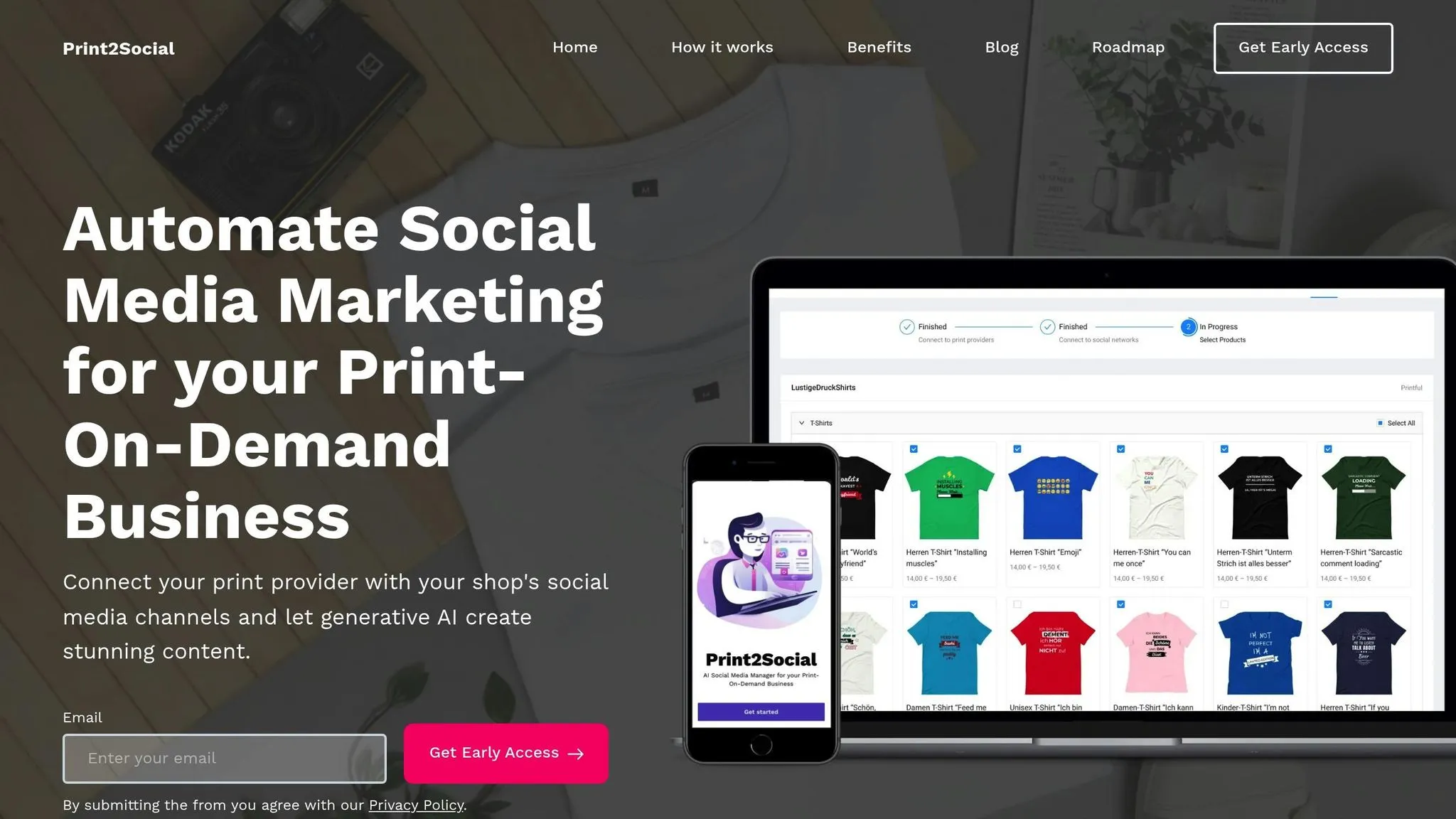
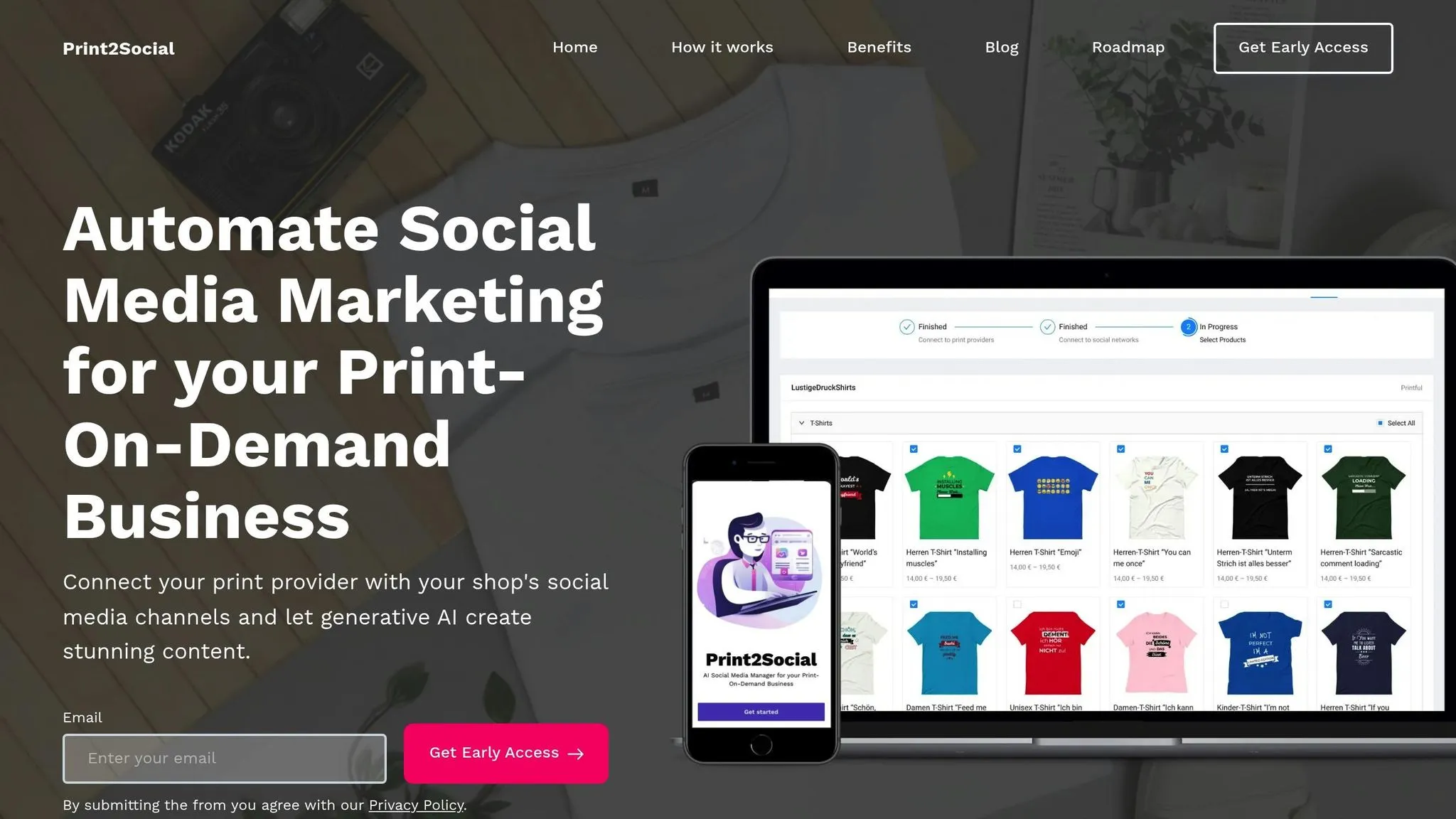
AI-powered tools can make social media management much more efficient by automating tasks like content creation, scheduling, and audience engagement. For example, Print2Social connects directly with POD fulfillment providers and your social media accounts. It uses generative AI to create promotional images and videos featuring your products, while automation tools handle scheduling to keep your brand active online.

To get the most out of these tools, use AI to draft content and then refine it to ensure it aligns with your brand’s tone and identity. Always review AI-generated content for accuracy and relevance. This approach helps maintain a human touch while keeping your messaging consistent. Additionally, integrating these tools with your POD providers ensures smooth data synchronization for promotional efforts.

Integrating AI tools with your POD fulfillment providers is essential for creating a seamless branding experience across all customer interactions. This setup allows for real-time product updates, inventory synchronization, and consistent branding across platforms.

Make sure your AI tools can directly communicate with your POD systems. This connectivity ensures automatic updates for product details, inventory levels, and branding elements. For instance, Print2Social synchronizes product data to generate consistent promotional content.

AI also helps maintain brand consistency by analyzing your brand’s core attributes and applying them across platforms. This is especially useful when managing multiple POD providers or selling on various channels. As Mark de Grasse puts it:

AI branding is a version of branding that is enforceable, consistent, and easy. By centralizing decision making and guiding it through clear brand parameters, you can create almost anything and make it brand consistent.

Automation is another major advantage of AI. It’s perfect for handling repetitive tasks like product updates, applying brand guidelines, and syncing data across platforms. You can even use AI to streamline tasks in everyday apps like Slack, Google Sheets, and HubSpot, creating an interconnected system where your POD operations, marketing, and customer service all work together.

The end result? A scalable branding system that delivers the consistency and quality necessary to build trust and recognition in the competitive POD market.

Once your AI tools are up and running, the next step is making them work for you with strategies that deliver measurable results. These approaches focus on three key areas where AI can significantly boost your print-on-demand (POD) branding efforts.

AI takes design creation to the next level by analyzing customer data and current trends. It can suggest tailored design elements like colors, fonts, and layouts that align with your audience’s preferences.

It also works behind the scenes to optimize user-uploaded images for print. From automatically adjusting image quality to cropping and removing backgrounds, AI ensures designs are ready for production. It can even upscale images to meet print quality standards. Additionally, AI simplifies repetitive tasks like layout adjustments and color matching, while quickly generating multiple design variations.

AI doesn’t just make designs better - it also reduces errors. By identifying and correcting mistakes during the design process, AI minimizes waste and improves efficiency.

Once your designs are polished, the next step is to extend your reach through automated social media strategies.

AI can also streamline your social media marketing efforts, making it easier to connect with your audience. By integrating with POD fulfillment providers, AI tools can automatically generate promotional content, saving you hours of manual work.

These tools create a variety of content options, from promotional posts to educational and engagement-focused material. For instance, Print2Social generates 12 images and 8 short videos per product. AI tools also schedule posts at optimal times for maximum engagement.

The results speak for themselves. In a two-week experiment using Print2Social, a pets niche store saw a 207% increase in views, a 200% jump in reach, and an 80% boost in site visits. Meanwhile, a humor niche store experienced a 97% drop in reach after pausing Meta ads, yet its Reels still managed over 100 views. A travel niche store saw modest engagement, with some Reels also surpassing 100 views.

Print2Social’s pricing is competitive compared to traditional social media management services, and it integrates seamlessly with major POD platforms and social networks. To maximize results, focus on Reels and short-form video content. Experiment with different ad creatives - headlines, images, and copy - to identify what drives the most clicks and conversions.

AI doesn’t just streamline design and content creation - it also provides valuable market insights to refine your branding strategy. By analyzing vast amounts of data, AI tools can uncover trends and customer preferences in record time. For example, they can process social media comments, reviews, and customer interactions to measure sentiment about your products and services.

Competitive intelligence tools like Crayon compare your performance against competitors by analyzing their websites, social media activity, and even job postings, revealing untapped opportunities. Similarly, platforms like Insight7 analyze videos, calls, and interviews to identify customer sentiment and buying motivations. Considering that 65% of shoppers say personalized experiences influence their purchases and 79% of ecommerce businesses report higher conversion rates with AI tools, these insights are invaluable for POD success.

To implement this effectively, start by organizing your internal data, such as employee surveys, and combine it with external data like SEO keywords. AI tools like ChatGPT can help you create detailed buyer personas to better understand your target audience. Unlike traditional market research, which can be time-consuming, AI aggregates and analyzes data almost instantly. Tools like Quantilope even automate A/B testing through surveys, helping you make informed decisions about your POD offerings.

Looking to bring AI into your print-on-demand business? Here’s a step-by-step checklist to guide you from selecting the right tools to tracking performance, ensuring your AI branding efforts deliver measurable results.

Start by identifying AI tools that match your branding and marketing goals. These tools can help with everything from design and mockup generation to social media management, customer support, and advertising.

For design, consider platforms like Kittl, which offers plans starting at $15/month (or $10/month with annual billing), and Imagine Art, whose Basic plan is also $15/month. If you’re new to mockups, Dynamic Mockups provides a Forever Free Plan, along with a Pro Plan at $10/month. For automating social media, Print2Social can simplify your workflow.

Customer support automation is another area to explore. Tools like Chatfuel offer a Business plan at $23.99/month for 1,000 conversations. For advertising, Adzooma provides a Free Plan and paid options starting at $69/month.

Strike a balance between free and premium tools. Free options cover basic needs, but paid tools offer advanced features like SEO optimization, multilingual support, and deeper customization.

Once you’ve chosen your tools, refine your workflows to make the most of AI’s capabilities.

AI can revolutionize your design process by analyzing customer data and trends to suggest elements like colors, fonts, and layouts tailored to your audience. Test AI-generated designs to ensure they meet your quality standards.

Use AI tools to enhance your workflow. These tools can upscale images for print quality, automatically adjust settings, and even remove backgrounds from user-uploaded content. Plus, AI can quickly generate multiple design variations, saving you time.

To maintain brand consistency, pair AI insights with your creative vision. While AI is great for technical optimization, your input ensures designs reflect your brand’s personality and resonate with your target audience. Introduce quality control checkpoints to ensure AI-driven designs meet both branding and market expectations.

Social media automation is a major advantage AI offers to print-on-demand businesses. AI can help generate content ideas, create visuals, write captions, and analyze audience engagement to refine your strategy.

Schedule posts at the best times across platforms. For instance, posts with images get 98% more comments on LinkedIn, and tweets with visuals are three times more likely to engage users. Use these insights to focus on visual content in your campaigns.

AI can also help create high-engagement visuals and captions. For example, memes often generate 60% more organic engagement than standard posts. Additionally, AI tools can perform sentiment analysis, giving you a better understanding of customer preferences.

Set up systems to monitor trending topics so your content stays timely and relevant. Once your content is automated, define clear metrics to measure its success.

To measure the success of your AI branding efforts, set up robust tracking systems. Businesses using AI in marketing often see 20–30% higher ROI compared to traditional methods.

Track both technical and business metrics. For technical performance, monitor measures like accuracy, precision, recall, F1 score, AUC-ROC, and MAE to ensure your AI systems are reliable and unbiased.

On the business side, focus on metrics like customer lifetime value, repeat purchase rates, and average order values. Over 55% of retailers report AI-driven ROI exceeding 10%, and even a 5% increase in customer retention can boost profits by 25% to 95%.

Combine data-driven metrics with real user feedback for a well-rounded view of your performance. Collect feedback on AI-generated designs, social media posts, and overall customer experience.

Start with core performance indicators - such as engagement rates, conversion rates, and revenue per customer - and expand to more detailed measurements as your AI strategy evolves. Stay ahead by participating in online communities and experimenting with the latest AI tools.

AI is making waves in print-on-demand (POD) operations by enhancing efficiency, cutting costs, and driving smarter decisions. For example, AI simplifies order processing, reduces errors, and fine-tunes production with accurate material forecasting, helping businesses save money. Companies like Amarra have already seen impressive results - using ChatGPT for product descriptions slashed their content creation time by 60%, while their AI-driven inventory system reduced overstocking by 40%.

Customer service is another area where AI shines. AI-powered chatbots now handle 70% of customer inquiries, offering round-the-clock support. On top of that, advanced data analysis helps businesses deliver personalized product recommendations and create marketing materials tailored to their audience - all without the need for large inventories.

AI design tools are also a game-changer. They create original designs, refine color schemes, and optimize fonts, all while minimizing waste through on-demand production. The result? A more streamlined and cost-effective approach to branding.

To make the most of these benefits, start with clear goals and manageable AI projects that can grow over time.

Starting small is key. Businesses with well-defined AI goals and measurable KPIs are 1.5 times more likely to succeed. Begin by identifying areas where AI can provide the most support, such as marketing, inventory management, or customer service.

One practical starting point is using tools like Print2Social, which automates social media content creation and scheduling. This tool integrates directly with POD fulfillment providers, making it easier to manage promotions effectively.

“AI tools for print-on-demand can help sellers create designs, streamline operations, and market their products effectively…the best AI tools can help you save time, reduce costs, and scale efficiently.”

When choosing AI tools, focus on those that work seamlessly with platforms like Shopify or Etsy. Opt for beginner-friendly options that offer free trials or basic plans, so you can test their value before committing to premium versions. Look for tools with strong customer support and learning resources, especially if you’re new to AI.

Start with small, manageable projects and expand gradually. Keep a close eye on performance, and don’t hesitate to tweak your tools and strategies as you learn what works best for your business. Regularly evaluate your AI investments to ensure you’re getting the most out of them.

The POD industry is evolving rapidly, and AI is at the forefront of this transformation. Businesses that embrace these technologies early will be better equipped to stay competitive. With the AI e-commerce market expected to grow from $5.83 billion to $64.03 billion by 2034, now is the perfect time to position your business for long-term success.

How can AI tools help POD businesses create professional designs without advanced design skills?

Section titled “How can AI tools help POD businesses create professional designs without advanced design skills?”

AI tools are making life easier for print-on-demand (POD) businesses by simplifying the design process. With intuitive features that don’t demand advanced design skills, platforms like Canva and Adobe Sensei use AI to handle tasks such as removing backgrounds, optimizing layouts, and generating realistic product mockups.

These tools allow business owners to create polished visuals quickly and efficiently, cutting down on the time and effort that would otherwise go into design. By taking the hassle out of the creative process, AI tools free up more time to focus on building your brand and engaging with your customers.

How can I integrate AI tools seamlessly with my print-on-demand fulfillment systems?

Section titled “How can I integrate AI tools seamlessly with my print-on-demand fulfillment systems?”

To make AI tools work effectively with your print-on-demand (POD) fulfillment systems, start by focusing on API compatibility and establishing clear data exchange protocols. These measures ensure smooth communication between AI tools and your fulfillment platforms, cutting down on errors and boosting overall efficiency.

It’s also important to invest in thorough training for your team so they can adapt to AI-driven workflows. Introducing these tools gradually - by rolling them out in phases - can help reduce disruptions and give you time to resolve any technical hiccups. This step-by-step approach helps ease the transition and allows your POD business to fully leverage the advantages of AI solutions.

How can AI-powered tools like Print2Social improve social media marketing for print-on-demand businesses?

Section titled “How can AI-powered tools like Print2Social improve social media marketing for print-on-demand businesses?”

AI-powered tools like Print2Social are changing the game for social media marketing in the print-on-demand (POD) world. These tools take the hassle out of managing social media by automating tasks like creating and scheduling posts. Using generative AI, they craft eye-catching images and videos that showcase your products, helping your brand grab attention on social platforms.

What makes Print2Social even more efficient is its ability to connect directly to your POD providers and online store. It pulls product details automatically and handles everything from content creation to publishing. This not only saves you time but also ensures your online presence stays polished and consistent, giving you more freedom to focus on growing your business.

How AI Enhances Payment Security in Print-on-Demand

AI is transforming payment security in the print-on-demand industry, helping businesses combat fraud and protect transactions. With fraud rates increasing by 70% in the past two years, AI tools now analyze transactions in real time, detect suspicious activity, and reduce financial losses.

  • Fraud Prevention: AI-powered systems like Visa’s VAAI Score saved $1.1 billion by identifying fraudulent patterns.
  • Improved Accuracy: AI reduces false positives by up to 73% while detecting more fraud cases.
  • 24/7 Monitoring: Continuous transaction oversight ensures around-the-clock protection.
  • Behavior Analysis: Tracks user habits to prevent account takeovers and identity theft.
  • Cost Savings: AI-driven compliance tools save time and reduce fraud-related expenses by up to 50%.
  • Novo: Achieved a 0.003% chargeback rate using AI, despite processing over $1 billion monthly.
  • HSBC: Monitors 1.35 billion transactions across 40 million accounts with AI.
  • Mastercard: Uses AI to analyze shopping behavior, reducing false declines by 80%.

AI also strengthens security through multi-factor authentication, adaptive learning, and compliance with standards like PCI DSS. By combining AI with blockchain, businesses can further enhance transaction security and build customer trust.

Takeaway: AI is essential for securing payments in print-on-demand, reducing fraud, and ensuring smooth, secure transactions.

How it works: Visa’s artificial intelligence (A.I.) for payment authorization and fraud detection

Section titled “How it works: Visa’s artificial intelligence (A.I.) for payment authorization and fraud detection”

AI-secured systems add a powerful layer of protection to print-on-demand transactions by combining advanced pattern analysis with real-time monitoring. These systems rely on machine learning to detect fraud and ensure continuous oversight of transactions.

Machine learning plays a crucial role in identifying and preventing fraudulent activities. By analyzing transaction data, AI can predict and stop potential fraud with impressive accuracy. According to research from McKinsey & Company, AI-driven fraud detection has the potential to cut fraud-related costs by 30% to 50%.

Here are some of the standout features that make this possible:

Detection Feature

Function

Impact

Pattern Analysis

Reviews transaction details like time, location, and amount

Flags unusual activity in milliseconds

User Behavior

Tracks login habits and device usage

Blocks account takeover attempts

ID Verification

Examines invoices and identification documents

Helps prevent identity theft and invoice fraud

Relationship Mapping

Maps connections between users and accounts

Exposes organized fraud networks

For example, HSBC has adopted AI monitoring technology that processes an astounding 1.35 billion transactions across 40 million accounts. These capabilities are further strengthened by continuous monitoring, which ensures transactions remain secure around the clock.

AI doesn’t just detect fraud - it keeps a constant watch over every transaction. With global online payment fraud losses hitting $41 billion in 2022 and expected to climb to $48 billion by the end of 2023, this level of vigilance is more important than ever.

“Cybercriminals have always been early adopters of the latest technology, and AI is no different.” – Martin Roesler

Here’s how AI keeps transactions safe:

  • Instant Risk Assessment: AI evaluates multiple factors in real time, assigning risk scores to transactions immediately.
  • Adaptive Learning: Unlike rigid rule-based systems, AI evolves by learning from new fraud patterns, improving its detection methods over time.
  • Smart Alert System: AI prioritizes genuine threats while minimizing false alarms, ensuring smooth operations for legitimate users.

One standout example is United Overseas Bank’s use of Tookitaki’s AI-powered monitoring solution. This system not only prioritizes alerts based on risk scores but also identifies previously undetected suspicious patterns, showcasing the transformative potential of continuous AI monitoring.

AI verification methods play a crucial role in safeguarding print-on-demand payment systems. By analyzing user behavior and adjusting security measures in real time, these systems help prevent unauthorized transactions while minimizing disruptions for legitimate users.

AI-driven systems excel at identifying intricate behavioral patterns by analyzing a wide range of data points. They establish a baseline for normal activity and flag any deviations that seem suspicious. This proactive approach can reduce false transaction declines by as much as 80%.

Here are some key behavioral indicators monitored in print-on-demand transactions:

Behavior Type

Data Points Analyzed

Security Impact

Transaction Patterns

Purchase history, frequency, amounts

Identifies unusual spending behavior

Device Usage

Login times, locations, hardware IDs

Detects account takeover attempts

Navigation Habits

Browsing patterns, interaction speed

Flags automated fraud attempts

Purchase Context

Cart composition, shipping details

Prevents shipping fraud

A practical example of this is Mastercard’s Decision Intelligence technology. It uses historical shopping data and spending habits to create behavioral baselines, allowing it to evaluate new transactions within milliseconds. This behavioral insight is further enhanced with multi-factor authentication (MFA), which adapts to the risk level of each transaction for added security.

MFA has become a critical security layer, especially as data breaches have surged by 72% since 2021, with the average breach costing $4.45 million. AI enhances MFA by tailoring security requirements to the assessed risk level, ensuring both robust protection and user convenience.

“IAM leaders should migrate to passwordless methods wherever they can, and as soon as they can, to enhance security and optimize UX. This migration should also take into account other needs, such as phishing-resistant MFA and strong customer authentication (SCA).” - Gartner Report

AI strengthens MFA through several key mechanisms:

  • Risk Assessment: AI calculates real-time risk scores by analyzing transaction details, location, device reputation, and behavioral patterns.
  • Adaptive Authentication: Based on the risk score, the system may require additional verification, such as biometric scans or hardware tokens.
  • Continuous Monitoring: AI adapts to emerging threats by learning from new data, refining risk thresholds, and updating authentication protocols.

The importance of MFA becomes even clearer when considering that over 80% of cyber breaches stem from stolen or weak passwords. For instance, Sift’s AI-powered MFA solution achieved a 427% increase in blocked account takeover attempts in 2023, showcasing its effectiveness in combating cyber threats.

AI technology is reshaping how print-on-demand businesses handle security compliance, particularly in payment processing. These advanced systems not only simplify compliance monitoring but also reinforce data security at every stage of a transaction.

AI-driven tools are revolutionizing the way businesses meet Payment Card Industry Data Security Standard (PCI DSS) requirements. These systems automate monitoring, adjust security measures in real time, and continuously scan for vulnerabilities to ensure compliance with strict protocols.

Compliance Aspect

AI Implementation

Business Impact

Data Encryption

Automated encryption

Prevents unauthorized access

Access Control

Real-time monitoring of user permissions

Reduces internal security risks

Transaction Monitoring

Continuous scanning for suspicious patterns

Prevents $25B in annual fraud losses

Audit Reporting

Automated compliance documentation

Saves over 360,000 work hours annually

Take JPMorgan’s COIN program as an example. This AI-powered compliance system reviews commercial loan agreements, extracts critical data, and saves the company more than 360,000 hours of manual labor each year - all while adhering to stringent security protocols. Beyond compliance, these tools also enhance overall data protection.

AI doesn’t just help businesses meet security standards; it also safeguards sensitive data at every stage. By automating processes like data classification and applying risk-based security measures, AI ensures that data remains protected.

Here are some key methods AI employs to protect data:

  • Automated Data Classification: AI identifies and categorizes sensitive information, applying the necessary security controls.
  • Network Monitoring: AI detects unusual data patterns and potential breaches in real time.
  • Access Control Management: AI enforces dynamic access policies based on user behavior and risk levels.

To maximize protection, businesses should adopt AI-driven access policies tailored to:

  • Model training requirements
  • Levels of data sensitivity
  • Differential privacy needs
  • User authentication status

For instance, HighRadius’s AI-powered treasury payment solutions showcase the practical benefits of these measures. These systems automatically identify 90% of payment errors, sanctions violations, and fraudulent activities, all while cutting payment processing costs by 30%. This blend of security and efficiency illustrates how AI is transforming data protection.

Combining blockchain with AI brings a new level of security to print-on-demand payment systems. Blockchain’s unchangeable ledger, paired with AI’s ability to analyze data, creates a more secure and efficient way to verify transactions.

For instance, AI can scan blockchain records to detect irregularities, triggering automated fraud alerts when necessary. This integration strengthens transaction verification, enhances fraud prevention, and improves overall data security.

Integration Benefit

AI’s Role

Blockchain’s Role

Transaction Verification

Pattern recognition

Immutable transaction records

Fraud Prevention

Predictive modeling

Smart contract automation

Data Security

Behavioral analysis

Decentralized storage

These advancements not only bolster security but also lay the groundwork for earning customer trust.

With these security measures in place, AI becomes a vital tool for fostering trust in print-on-demand transactions. Transparency is key - 85% of consumers consider it a critical factor in trusting brands and companies.

A great example is Rakuten France, where AI-based security systems improved fraud detection and operational efficiency, boosting both security and customer confidence.

“AI is changing the physics of financial services”, stated a 2018 Deloitte report.

AI-driven security technologies are already delivering impressive results:

  • Fraud detection systems: Prevent an estimated $25 billion in annual losses.
  • Real-time transaction monitoring: Instantly identifies suspicious activity.
  • Smart authentication: Reduces false positives while maintaining robust security.
  • Automated compliance checks: Ensure adherence to regulations consistently.

For print-on-demand businesses, adopting these advanced tools requires careful planning. BlaBlaCar offers a great example of how AI can protect sensitive user data while ensuring a seamless customer experience, minimizing the need for excessive personal information. Platforms like Print2Social can also benefit by integrating AI-driven payment security, creating a streamlined and trustworthy payment framework.

As the global blockchain market is projected to hit $69.04 billion by 2027, businesses that adopt these technologies early will position themselves to better prevent fraud and gain customer trust. The key lies in developing smarter AI models that can adapt to evolving threats while ensuring smooth, secure transactions.

How does AI help reduce false positives in fraud detection for print-on-demand payments?

Section titled “How does AI help reduce false positives in fraud detection for print-on-demand payments?”

AI helps cut down on false positives in fraud detection by leveraging machine learning models that continuously learn and improve as new data comes in. These models dig into transaction patterns and customer behavior to distinguish between genuine and suspicious activities, leading to fewer unnecessary alerts.

Through behavioral analytics, AI examines spending habits and contextual details, adjusting detection thresholds in real time. This makes it far more effective than traditional rule-based systems, which often fall behind as fraud tactics evolve. The result? A more accurate system that ensures smoother and more reliable payment experiences for businesses and customers alike.

How does combining AI and blockchain improve payment security in the print-on-demand industry?

Section titled “How does combining AI and blockchain improve payment security in the print-on-demand industry?”

Integrating AI with blockchain takes payment security in the print-on-demand industry to a new level by blending transparency with smart fraud detection.

Blockchain works by recording every transaction on a secure, decentralized ledger that’s tamper-resistant and open for verification. This makes it extremely difficult to alter transaction data without agreement from the network, building trust and accountability. Meanwhile, AI steps in to analyze transaction patterns in real time. It spots unusual behavior or suspicious activities instantly, which helps detect potential fraud before it becomes an issue.

When combined, these technologies form a robust system that not only safeguards sensitive payment information but also evolves to counter new threats, offering a safer and more dependable payment experience for print-on-demand businesses.

How does analyzing user behavior help enhance payment security and prevent fraud in print-on-demand services?

Section titled “How does analyzing user behavior help enhance payment security and prevent fraud in print-on-demand services?”

The Role of User Behavior Analysis in Payment Security

Section titled “The Role of User Behavior Analysis in Payment Security”

Keeping payments secure and preventing fraud is a top priority for print-on-demand services. One way companies achieve this is by analyzing user behavior through AI-powered systems. These systems keep a close eye on customer activity, building behavioral profiles to spot anything out of the ordinary. For instance, if someone suddenly makes a large purchase or processes a transaction from a high-risk location, the system can flag it for further investigation.

This kind of proactive monitoring allows businesses to tackle potential threats before they lead to financial damage. What’s more, machine learning enables these systems to evolve alongside new fraud tactics. This constant learning curve makes it much harder for fraudsters to find and exploit weaknesses. The end result? A smoother, safer transaction experience for both companies and their customers.

How AI Predicts 2025 Print-on-Demand Fashion Trends

AI is transforming the print-on-demand fashion industry by helping businesses predict trends, reduce waste, and increase sales. Here’s how AI makes it happen:

  • Trend Forecasting: AI analyzes social media, e-commerce, and search data to identify emerging fashion trends.
  • Design Creation: Tools like generative AI suggest color palettes, patterns, and styles based on consumer preferences.
  • Marketing Automation: Platforms like Print2Social automate content creation, generating images, videos, and posts to keep brands visible.
  • Production Planning: AI optimizes inventory, prioritizes popular designs, and aligns production with seasonal demand.

Google Gemini Advanced

Data Sources That Power AI Fashion Predictions

Section titled “Data Sources That Power AI Fashion Predictions”

AI taps into a variety of data streams to sharpen trend predictions, which play a crucial role in shaping print-on-demand strategies.

Social media platforms provide a treasure trove of real-time insights into consumer preferences, complementing traditional trend analysis. AI tools scan millions of posts daily, analyzing visual content and engagement metrics to spot emerging fashion trends. Here’s a closer look at how key platforms contribute:

Platform

Key Data Points

Trend Indicators

Instagram

Post engagement rates

Popular color choices

TikTok

Video view patterns

Trending design elements

Pinterest

Save and share metrics

Seasonal style shifts

For example, Print2Social uses AI-driven insights from these platforms to help print-on-demand businesses craft content aligned with current fashion preferences. By analyzing engagement data, it identifies the best times to post and the types of content that perform well.

But social media isn’t the only source of trend clues - online shopping behavior adds another layer of understanding.

E-commerce platforms reveal a wealth of information about consumer buying habits. AI systems track metrics like view-to-purchase ratios, cart abandonment rates, and category growth, as well as seasonal purchasing trends.

This data is invaluable for print-on-demand businesses, as it highlights which designs and products are likely to gain traction. By identifying these shifts early, businesses can stay ahead of the curve and meet demand before trends hit their peak.

Search engine data offers another lens into consumer interests. AI systems monitor search behavior to uncover what shoppers are actively seeking. Key metrics include:

Search Metric

Business Impact

Search volume trends

Highlights emerging design themes

Geographic distribution

Uncovers regional style preferences

Related keyword growth

Detects new style combinations

Applying AI Predictions to Print-on-Demand Business

Section titled “Applying AI Predictions to Print-on-Demand Business”

AI is transforming how print-on-demand businesses create designs by analyzing trends from social media, e-commerce platforms, and search data. These insights help pinpoint design elements that are likely to appeal to customers. On top of that, modern AI tools can generate mockups and lifestyle images, making it easier to envision how designs will look in real-world settings.

Design Element

AI Prediction Method

Business Application

Color Palettes

Social media engagement analysis

Develop seasonal collections

Pattern Types

Search trend monitoring

Create themed designs

Style Elements

E-commerce purchase data

Plan product variations

This approach doesn’t just stop at design creation - it extends into digital marketing as well.

Print2Social

Print2Social is redefining how print-on-demand businesses handle social media marketing. Powered by AI-driven automation, this platform connects directly to POD providers and social media accounts, simplifying the entire promotional process. Here’s what it does: for every product, Print2Social generates 12 images, 8 video clips, and 20 posts.

This robust content creation ensures businesses maintain a steady social media presence while staying in step with current fashion and design trends. The generated content includes a mix of promotional, educational, and engagement-focused posts, keeping audiences engaged and interested.

But the benefits of AI don’t stop at marketing. It also plays a key role in refining production strategies.

When social media tasks are automated, businesses gain more time to focus on production planning. AI insights make this process more strategic and data-driven. Here’s how businesses can use AI to optimize their operations:

Planning Aspect

AI Implementation

Business Benefit

Inventory Forecasting

Trend prediction analysis

Minimize overstock risks

Design Prioritization

Engagement metrics tracking

Concentrate production on popular designs

Seasonal Planning

Historical data analysis

Allocate resources more effectively

Common Issues and Solutions in AI Trend Analysis

Section titled “Common Issues and Solutions in AI Trend Analysis”

Accurate trend predictions start with reliable data. To achieve this, businesses should:

  • Pull data from a variety of sources and keep it updated by cross-checking with trusted industry references.
  • Ensure data consistency by integrating pipelines from platforms like social media, e-commerce, and search analytics.
  • Confirm trends by systematically cross-referencing multiple data points.

For print-on-demand businesses, staying ahead of market shifts is vital. Tools like Print2Social’s AI-powered platform can help by:

  • Identifying spikes in keyword usage.
  • Tracking engagement within specific categories.
  • Spotting emerging style and color preferences.

Reacting quickly to these insights allows businesses to stay nimble and better prepared for ongoing market evaluations.

After adapting to market changes, it’s equally important to keep a close eye on performance to ensure AI predictions stay accurate. Effective strategies include:

  • Comparing predicted trends with actual outcomes, such as sales conversion rates and customer interactions.
  • Monitoring both short-term metrics (like daily sales changes) and long-term patterns (such as seasonal trends).
  • Leveraging real-time analytics to pinpoint areas for improvement and refine forecasting models.

Print2Social’s analytics dashboard consolidates these insights, offering real-time updates that help businesses fine-tune their strategies effectively.

As we’ve explored, AI isn’t just a buzzword - it’s a game-changer for businesses, especially in the fast-paced world of print-on-demand fashion. By tapping into AI-driven trend forecasting and automation, companies can make smarter decisions and operate more efficiently.

With automated platforms taking over repetitive tasks, business owners can shift their focus to big-picture strategies, like innovative designs and long-term planning. But AI’s role doesn’t stop at predicting trends. It also helps brands stay consistently active and relevant by managing diverse content creation with ease.

What makes AI truly impactful is its ability to scale operations without sacrificing quality. Whether you’re managing a handful of designs or an extensive catalog, AI ensures consistency and efficiency. To unlock its full potential, businesses should:

  • Automate Repetitive Tasks: Delegate tasks like content creation and scheduling to AI, freeing up time for creative and strategic efforts.
  • Use Data to Guide Decisions: Rely on AI-generated insights to shape design choices and marketing campaigns.
  • Maintain Brand Consistency: Let AI handle diverse content production while keeping your brand’s identity intact.

The future of the fashion industry will belong to those who embrace AI’s capabilities. By blending trend forecasting with automated marketing, businesses can set themselves up for lasting success in the ever-evolving market of 2025 and beyond.

Section titled “How does AI analyze social media data to forecast fashion trends for print-on-demand businesses?”

AI uses powerful algorithms to sift through massive amounts of social media data, such as trending hashtags, popular posts, and user engagement. By spotting patterns in colors, designs, and styles that are resonating online, it can accurately forecast upcoming fashion trends.

For print-on-demand businesses, this kind of insight is a game-changer. It allows you to stay ahead by designing products that align with what’s currently popular. Tools like Print2Social take it a step further by integrating these trends into your marketing content, helping you connect with your audience more effectively and boost sales.

How can AI tools like Print2Social improve marketing and planning for print-on-demand fashion businesses?

Section titled “How can AI tools like Print2Social improve marketing and planning for print-on-demand fashion businesses?”

AI-powered tools like Print2Social make marketing and production planning easier for print-on-demand fashion businesses by automating essential tasks. It connects directly with your fulfillment providers and social media accounts, simplifying the process of creating and scheduling promotional content.

Thanks to its generative AI features, Print2Social can produce high-quality images and short videos customized for your products. It can generate up to 20 unique social media posts per item, saving you time while keeping your branding consistent. Plus, it helps you stay on top of trends so you can focus on growing your business.

How can print-on-demand businesses trust AI trend predictions and quickly respond to market changes?

Section titled “How can print-on-demand businesses trust AI trend predictions and quickly respond to market changes?”

AI-powered trend predictions can be a game-changer when paired with a forward-thinking strategy. To get the most accurate insights, businesses should rely on AI tools that pull data from a variety of sources, like social media trends, customer behavior patterns, and industry reports. Keeping a close eye on these insights on a regular basis can help you anticipate and respond to new market demands.

Speed and adaptability are key. Prioritize flexibility in both your production processes and marketing strategies. For instance, tools like Print2Social make it easier to react to trends by automating the creation and scheduling of promotional content based on popular designs. By using AI tools effectively and staying informed, you can align your products and campaigns with shifting market trends and customer needs.

How AI Helps POD Businesses Scale Social Media

AI is transforming how print-on-demand (POD) businesses manage social media by automating tasks and boosting efficiency. Here’s how AI tools like Print2Social make it easier to grow your POD business online:

  • Saves Time: Automates content creation, scheduling, and repetitive tasks.
  • Creates Better Content: Generates product images, videos, and posts tailored to your audience.
  • Optimizes Posting: Finds the best times to post based on audience behavior and trends.
  • Improves Reach Across Platforms: Customizes content for Instagram, Pinterest, TikTok, and Facebook.
  • Tracks Performance: Analyzes engagement and adjusts strategies in real-time.

With AI, you can focus on growing your business while maintaining a consistent, high-quality social media presence.

AI technology has transformed how print-on-demand (POD) businesses approach social media content. Print2Social’s AI system takes the hassle out of manual content creation by generating 12 product images and 8 short videos for every item in your catalog. This results in a variety of content tailored for different audiences.

Here’s what the AI creates:

Content Type

Examples

Static Images

Product mockups, lifestyle shots, flat lays

Video Content

Product demos, lifestyle clips

Post Types

Promotional, educational, engagement-driven

By analyzing trends and customer behavior, the AI ensures your content stays relevant and engaging while aligning with your brand’s voice. Plus, it integrates directly with scheduling tools to maximize your audience reach.

AI-powered tools take the guesswork out of scheduling by analyzing engagement patterns to pinpoint the best times to post. Here’s what the system evaluates:

  • Past engagement trends
  • Time zone variations
  • Platform activity peaks
  • Seasonal shifts in behavior

These data-driven insights help ensure your posts land at the right time to capture the most attention.

Getting started is simple, thanks to a streamlined four-step process:

1. Store Connection: Link your POD store to Print2Social to sync your product catalog.

2. Product Selection: Pick specific items or categories to promote across social platforms.

3. Content Generation: Let the AI create 20 unique pieces of content for each product.

4. Schedule Review: Check the AI-crafted content calendar and tweak it if needed before posts go live.

“Easily link your print-on-demand shops and social media accounts in just a few clicks.” - Print2Social

This automated system slashes the time spent on social media management while delivering high-quality, engaging content to fuel growth for POD businesses.

Social Media Platform Selection for U.S. Market

Section titled “Social Media Platform Selection for U.S. Market”

Print2Social’s AI helps identify the most effective social media channels for print-on-demand (POD) products by analyzing product categories and audience demographics.

Platform

Best Content Types

Ideal Product Categories

Instagram

Lifestyle photos, Stories

Apparel, accessories, home decor

Pinterest

Product pins, collections

Wall art, home goods, seasonal items

TikTok

Short-form videos

Trendy apparel, statement pieces

Facebook

Mixed media, carousels

Custom gifts, family-focused items

For example, when it comes to apparel, the AI generates Instagram-ready lifestyle photos and TikTok videos that showcase products in everyday settings. These tailored insights ensure your content aligns with platform-specific preferences.

Print2Social goes beyond basic analytics by providing detailed performance insights to fine-tune your social media strategy. It tracks key metrics to highlight the platforms delivering the best results.

The AI evaluates:

  • Engagement rates on each platform
  • Conversion rates for different content types
  • Patterns in audience growth
  • Peak activity times for optimal posting

Using this data, Print2Social’s AI adjusts your strategy in real time. If it notices higher engagement for certain product categories on a platform, it prioritizes creating and scheduling similar content for that channel.

Here’s how Print2Social simplifies cross-platform management:

  • Analyzes performance data to create and schedule optimized content
  • Adjusts posting schedules based on real-time engagement insights
  • Recommends content formats tailored to each platform’s audience preferences

This data-driven method helps your POD business maintain a strong presence on the most relevant social platforms while maximizing engagement with your U.S. audience.

Print2Social’s AI simplifies managing multiple social media accounts while keeping your brand’s message consistent. It automatically pulls products from your print-on-demand (POD) store and creates a variety of posts tailored to your audience. These posts include a mix of promotional, educational, and interactive content, helping your brand stay active and relevant on all platforms. This automation makes it easier to keep up with trends and quickly analyze customer feedback.

AI tools make it easier to react to market trends and customer feedback in real time. By tracking engagement patterns, the system helps fine-tune your content based on live performance data. Here’s how it works:

Response Type

AI Action

Business Impact

Customer Sentiment

Adjusts tone and messaging style

Builds stronger audience connection

Design Preferences

Highlights best-performing items

Boosts interest and sales potential

Seasonal Demand

Optimizes promotion timing

Captures peak sales opportunities

The system also generates multiple versions of posts to test what works best. Once it identifies successful elements, it integrates them into future strategies. These insights help businesses refine their content approach and see real improvements in key metrics.

Print2Social connects your POD store directly to your social media accounts, streamlining everything from product selection to scheduling posts. Using AI to create and time posts not only ensures a polished social media presence but also saves time on manual tasks. Performance data consistently shows increased engagement rates and audience growth across the platforms it manages, making it a powerful tool for scaling your online presence.

Copy This 100% Automatic AI Print On Demand System (Make …

Section titled “Copy This 100% Automatic AI Print On Demand System (Make …”

Conclusion: AI Tools for POD Business Success

Section titled “Conclusion: AI Tools for POD Business Success”

AI tools have reshaped how print-on-demand (POD) businesses handle their social media efforts. By automating essential marketing tasks, these tools help businesses grow efficiently while keeping their audience engaged across various platforms.

Here’s how AI makes a difference for POD businesses:

Saving Time and Resources: Automation takes over tasks like content creation and scheduling, freeing up business owners to focus on bigger-picture strategies instead of daily social media chores.

Improving Content Quality: AI ensures a mix of promotional, educational, and engaging posts. It also creates visually appealing content that keeps audiences interested while maintaining a consistent brand image.

Supporting Scalable Growth: Unlike traditional methods that often require more staff to handle growth, AI tools keep performance steady as your business expands, managing your product catalog efficiently without extra labor.

Growth Factor

AI’s Role

Time Savings

Handles repetitive tasks

Content Quality

Produces polished visuals

Balanced Marketing

Ensures a diverse content mix

Scalability

Manages growth effortlessly

AI tools are becoming essential for POD businesses aiming to maintain a strong social media presence. By automating repetitive tasks and delivering high-quality content, these tools provide the support needed for steady and effective growth in today’s competitive market. They build on the strategies discussed earlier, offering a solid foundation for ongoing success.

How can AI determine the best times for a print-on-demand business to post on social media?

Section titled “How can AI determine the best times for a print-on-demand business to post on social media?”

AI-powered tools analyze a variety of factors to identify the optimal times for posting on social media. These factors can include audience activity patterns, engagement trends, and platform-specific insights. By leveraging this data, AI ensures your posts reach the largest and most engaged audience possible.

For print-on-demand businesses, tools like Print2Social make this process seamless by automating the analysis and scheduling of posts. This allows you to focus on growing your business while your social media strategy runs efficiently in the background.

What kind of content can AI create for a print-on-demand business, and how does it optimize posts for different social media platforms?

Section titled “What kind of content can AI create for a print-on-demand business, and how does it optimize posts for different social media platforms?”

AI can create a variety of content tailored to the needs of print-on-demand businesses, such as product mockups (including lifestyle photos, flat lays, and static images) and short videos like product showcases or lifestyle clips. These assets are designed to highlight your products and engage your audience effectively.

To optimize for different platforms, AI generates unique posts that combine these visuals into promotional, educational, and engagement-focused content. It adjusts formats and styles to suit each social media channel, ensuring your posts resonate with the intended audience and maximize reach. By automating this process, AI helps streamline your marketing efforts and saves valuable time.

Section titled “How can AI tools like Print2Social help POD businesses adapt to customer feedback and market trends quickly?”

AI tools like Print2Social empower print-on-demand (POD) businesses to stay agile by streamlining social media management. By leveraging generative AI, these tools can analyze market trends and customer preferences, enabling businesses to create timely and relevant content that resonates with their audience.

For example, Print2Social connects directly to your POD fulfillment providers and social media accounts, allowing it to fetch product details and generate promotional posts automatically. This means you can quickly respond to customer feedback or trending topics by showcasing tailored products in engaging formats like images and videos. The automated scheduling feature ensures your posts go live at the optimal time, keeping your brand visible and responsive in a fast-paced market.

Top 5 AI Tools for Automated Customer Responses

Managing customer inquiries can be time-consuming, especially for print-on-demand businesses. AI tools can automate repetitive tasks, speed up response times, and let teams focus on more complex issues. Here’s a quick look at five AI tools that can help:

  • Zendesk AI: Handles inquiries across channels, prioritizes urgent requests, and reduces response times.
  • Freshdesk AI: Automates routine tasks, improving efficiency and allowing focus on complex issues.
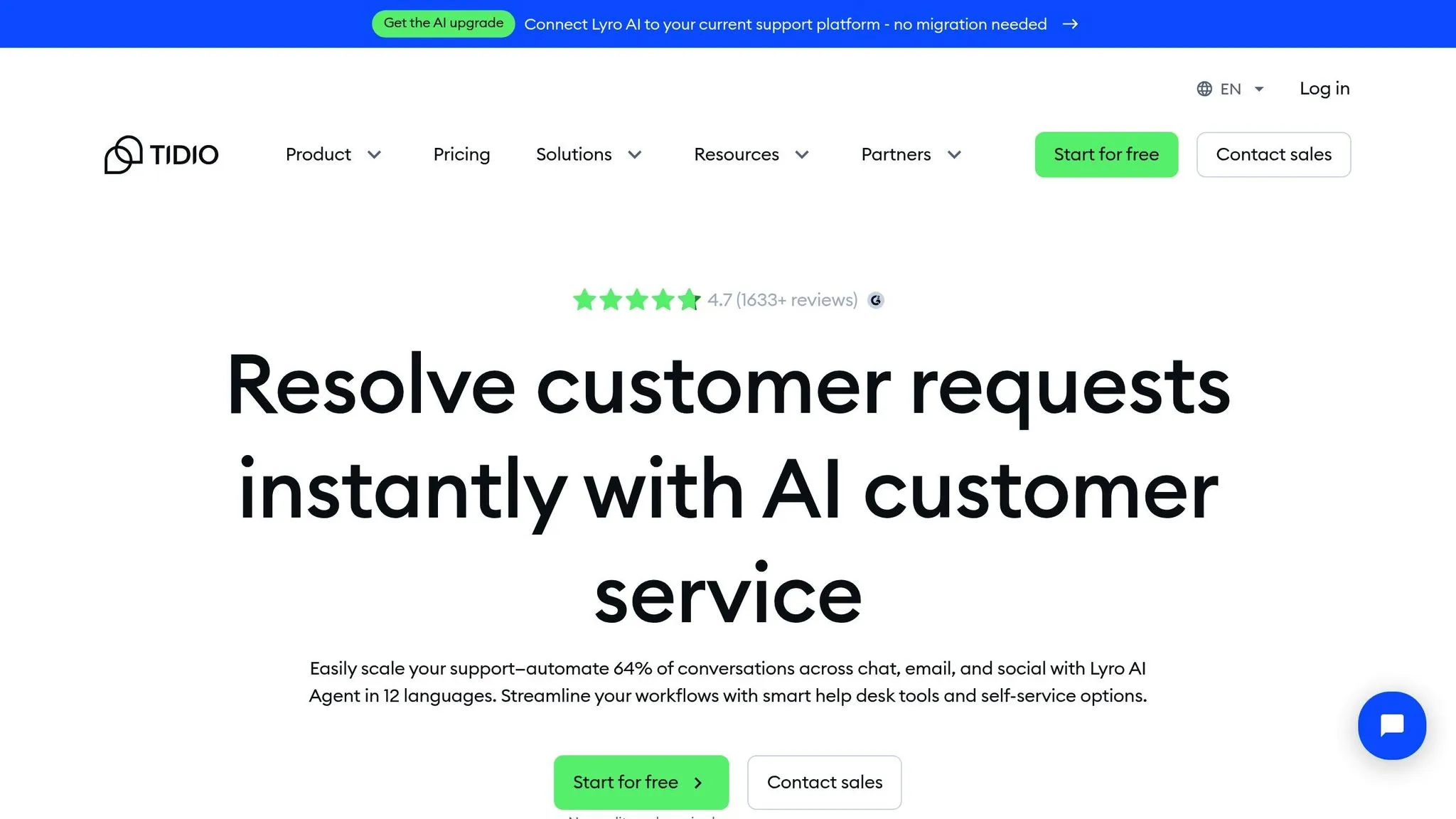
  • Tidio: Offers 24/7 multilingual chat support, smart order tracking, and analytics for improving customer interactions.
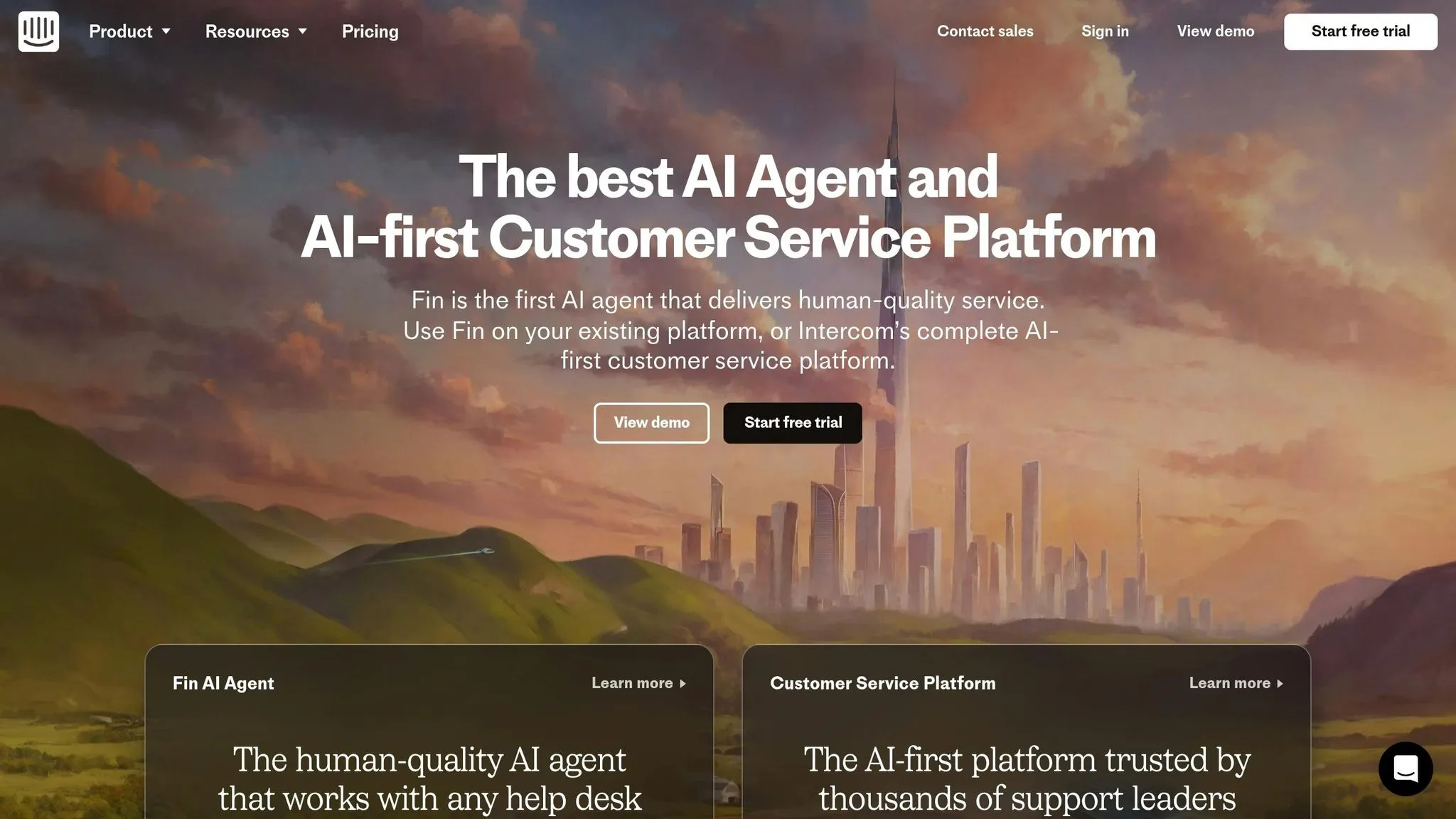
  • Intercom: Provides real-time updates, personalized replies, and integrates with e-commerce platforms.
  • Print2Social: Focused on print-on-demand, it automates social media posts with AI-generated visuals and schedules campaigns.

Feature

Zendesk AI

Freshdesk AI

Tidio

Intercom

Print2Social

Core Functionality

Customer service

Multi-channel support

Chat automation

Messaging platform

Social media for POD

Visual Content

Basic

Basic

Limited

Standard

Lifestyle images/videos

Automation Level

Medium

Medium

High

High

Full catalog automation

Platform Integration

Email, chat

Email, chat, social

Website chat

Multiple channels

POD + social media

Performance Analytics

Advanced

Advanced

Basic

Advanced

Social media metrics

These tools vary in focus, from general customer service to print-on-demand-specific solutions. Choose based on your business needs, integration options, and desired automation level.

Use These 2 AI Tools to Automate 80% of Your Customer …

Section titled “Use These 2 AI Tools to Automate 80% of Your Customer …”

Zendesk AI streamlines customer support by instantly handling inquiries across various communication channels. It efficiently manages common questions about order status, shipping details, and product information. With its smart routing system, urgent print-on-demand requests are prioritized, while routine queries are resolved automatically. This allows support teams to dedicate their time to more complex tasks, like custom design consultations. The result? Faster response times - cutting them down from hours to just seconds - and happier customers.

Now, let’s take a look at another AI tool transforming customer service automation.

Freshdesk AI is designed to simplify customer support for print-on-demand businesses by automating routine tasks. This tool helps businesses efficiently manage a high volume of customer inquiries.

By handling common questions automatically, Freshdesk AI allows support teams to focus on more complicated issues. It also shortens response times and improves overall service efficiency. With its smart automation features, businesses can offer reliable customer service while growing their operations.

Next, we’ll take a look at the following tool in our lineup.

Tidio

Tidio is an AI-powered support tool designed for print-on-demand businesses, offering real-time communication to handle customer inquiries efficiently and improve overall satisfaction.

The AI chatbot manages common questions like order status, shipping details, and customization options, providing 24/7 support without requiring constant manual input. It also features smart order tracking, which automatically retrieves and shares order updates when customers ask, cutting down on manual tasks.

The chatbot can handle multiple conversations at once, ensuring quick responses even during busy periods. You can customize messages for situations like order confirmations, shipping delays, or specific product details, and the AI improves its accuracy over time.

For businesses with a global reach, Tidio’s multilingual support is a game-changer. The AI can detect and respond in different languages, making it easier to connect with customers worldwide - perfect for companies selling custom products internationally.

Tidio also offers an analytics dashboard that helps you understand customer interactions. You can monitor common questions, response times, and satisfaction levels, giving you the data needed to improve your support strategies.

Additionally, Tidio includes proactive engagement tools to assist hesitant shoppers, helping turn potential customers into buyers.

Intercom

Intercom’s AI platform simplifies customer service for print-on-demand businesses by automating common tasks. Its Resolution Bot efficiently handles questions about order status, customization, and shipping, making it easier to manage workflows from the start.

The bot retrieves order details and provides real-time updates, helping reduce response times - especially during busy seasons. It also delivers personalized replies by tracking the context of previous conversations, ensuring customers feel heard and understood.

Intercom connects seamlessly with major e-commerce platforms, pulling in order details, tracking numbers, and product specifications. It automatically syncs this data with your catalog, so customers always get up-to-date information.

The platform also offers advanced analytics, helping you monitor key metrics like first response time, resolution rates, and customer satisfaction. These insights can guide improvements in your support process.

Even with high volumes of inquiries, Intercom’s scalable system maintains a personal touch, making it a great tool for businesses that prioritize efficient, customer-focused service.

Print2Social

Print2Social is an AI-driven tool designed specifically for print-on-demand businesses to simplify social media management and customer response. It connects directly with popular print-on-demand providers, automatically pulling store and product data. This integration allows it to create social posts tailored to your products, showcasing your designs with minimal effort.

The platform uses AI to analyze your product catalog and generate posts featuring images and videos. It even auto-schedules these posts into a social media calendar, ensuring your promotions stay consistent and on track.

Through its centralized dashboard, Print2Social offers a clear overview of your connected print-on-demand stores and scheduled content. Key features include:

  • Performance Tracking: View engagement metrics and measure the success of your campaigns.
  • Content Customization: Adjust AI-generated posts to match your brand’s style and tone.
  • Content Scheduling: Organize and plan your social media posts for optimal timing and impact.

This tool helps streamline social media efforts, making it easier for businesses to maintain a strong online presence.

Here’s a breakdown of the key features and capabilities of these AI-powered customer response tools to help you decide which one suits your needs:

Feature

Zendesk AI

Freshdesk AI

Tidio

Intercom

Print2Social

Core Functionality

General customer service automation

Multi-channel support automation

Website chat automation

Customer messaging platform

Social automation for print-on-demand (POD) businesses

Content Generation

Text responses

Text responses

Text responses

Text and basic images

12 images + 8 videos per product

Post Generation

N/A

N/A

N/A

Basic posts

20 unique posts per product

Visual Content

Basic

Basic

Limited

Standard

Lifestyle shots and product videos

Automation Level

Medium

Medium

High

High

Full catalog automation

Industry Focus

General

General

General

General

Print-on-demand specific

Platform Integration

Email, chat

Email, chat, social

Website chat

Multiple channels

POD providers + social media

Scheduling Features

Basic

Standard

Limited

Advanced

Automated calendar

Content Customization

Manual

Manual

Template-based

Template-based

AI-powered with manual override

Performance Analytics

Advanced

Advanced

Basic

Advanced

Social media metrics

The table highlights why Print2Social is tailored for print-on-demand businesses. It stands out by automatically generating high-quality images and videos, including lifestyle shots and product demos, which enhance social media engagement. Additionally, it offers full catalog automation, streamlining content creation and scheduling for any number of products. Its seamless integration with POD providers ensures accurate and efficient social media promotion, making it a powerful tool for businesses in this niche.

When selecting AI tools, look for those that connect effortlessly with your existing systems, create both text and visual content, and grow alongside your business needs. Our research shows that while general customer service AI tools handle basic text replies, specialized options like Print2Social go further by combining automated responses with visual content creation.

Focus on these three factors: integration, content creation, and scalability. To put these priorities into action, follow these steps:

  • Platform Integration: Link your print-on-demand stores and social media accounts to maintain consistent communication.
  • Content Automation: Use AI to generate templates and visuals that align with your brand identity.
  • Performance Analytics: Track metrics like response time, customer satisfaction, and social media engagement to continuously improve your approach.

How can I choose the right AI tool to automate customer responses for my print-on-demand business?

Section titled “How can I choose the right AI tool to automate customer responses for my print-on-demand business?”

To choose the best AI tool for your print-on-demand business, start by identifying your specific needs. Look for tools that offer features like automated content creation, product mockups, and social media scheduling. Consider whether the tool integrates seamlessly with your store and fulfillment providers, as well as its ability to generate engaging content such as promotional posts, lifestyle images, and short videos.

Evaluate how well the tool aligns with your marketing goals, such as streamlining social media management or enhancing customer engagement. Prioritize options that save you time while maintaining a professional and consistent brand presence.

What are the key benefits of using AI tools to automate customer service tasks?

Section titled “What are the key benefits of using AI tools to automate customer service tasks?”

AI tools designed for automating customer service tasks offer several key advantages that can significantly improve efficiency and customer satisfaction:

  • Faster Response Times: AI-powered systems can handle customer inquiries instantly, reducing wait times and ensuring customers receive prompt assistance.
  • 24/7 Availability: These tools work around the clock, providing support even outside of regular business hours.
  • Scalability: AI tools can manage multiple customer interactions simultaneously, making them ideal for businesses experiencing high volumes of inquiries.

By leveraging AI, businesses can streamline their operations while maintaining high-quality service, freeing up human agents to focus on more complex or personalized customer needs.

How does Tidio’s multilingual support improve customer interactions for global businesses?

Section titled “How does Tidio’s multilingual support improve customer interactions for global businesses?”

Tidio’s multilingual support allows businesses to communicate with customers in their preferred language, breaking down language barriers and enhancing the overall customer experience. This feature is especially valuable for print-on-demand businesses with an international customer base, as it ensures clear and effective communication across different regions.

By offering real-time translations and support for multiple languages, Tidio helps businesses build trust and foster stronger relationships with their global audience, ultimately leading to increased customer satisfaction and loyalty.