Skip to content

Blog

Ultimate Guide to AI Brand Storytelling for POD

AI tools are transforming how Print-on-Demand (POD) businesses connect with their audience. By combining automation with creativity, these tools help craft personalized, engaging stories that highlight brand values and products. Here’s what you’ll learn:

  • Why AI matters for POD storytelling: It helps scale content creation, personalize messages, and streamline workflows.
  • Top AI tools to consider: Tools like Print2Social, Adobe Sensei, and Wondr AI stand out for their ability to create visuals, automate posts, and analyze performance.
  • How to use AI effectively: Define your brand’s voice, create tailored content, and use AI analytics to refine your strategy.
  • Ethical and practical tips: Stay transparent about AI use, review content for accuracy, and balance automation with human creativity.

Quick Comparison of AI Tools for POD Storytelling

Section titled “Quick Comparison of AI Tools for POD Storytelling”

Tool

POD Integration

Visual Generation

Content Automation

Print2Social

Full support

Images and videos

Yes

Adobe Sensei

Limited

Advanced visuals

Yes

Wondr AI

Yes

Yes

Yes

AI is not here to replace creativity - it’s here to enhance it. Start small, track results, and adapt your storytelling to resonate with your audience.

Wondr AI

Selecting AI Tools for POD Brand Storytelling

Section titled “Selecting AI Tools for POD Brand Storytelling”

Recent research highlights that 61% of marketers see AI as a key part of their marketing strategy [3].

When choosing AI tools for POD brand storytelling, it’s important to focus on tools with features that align with your goals. Here’s a breakdown of what to prioritize:

Feature Category

Key Capabilities

Business Impact

Content & Visual Creation

AI-generated text, images, mockups, videos

Boosts storytelling effectiveness

Platform Integration

Links with POD providers

Simplifies product promotion

Automation & Analytics

Scheduling, posting, performance tracking

Enables data-backed storytelling

One standout option is Print2Social, a tool tailored specifically for POD businesses.

Print2Social

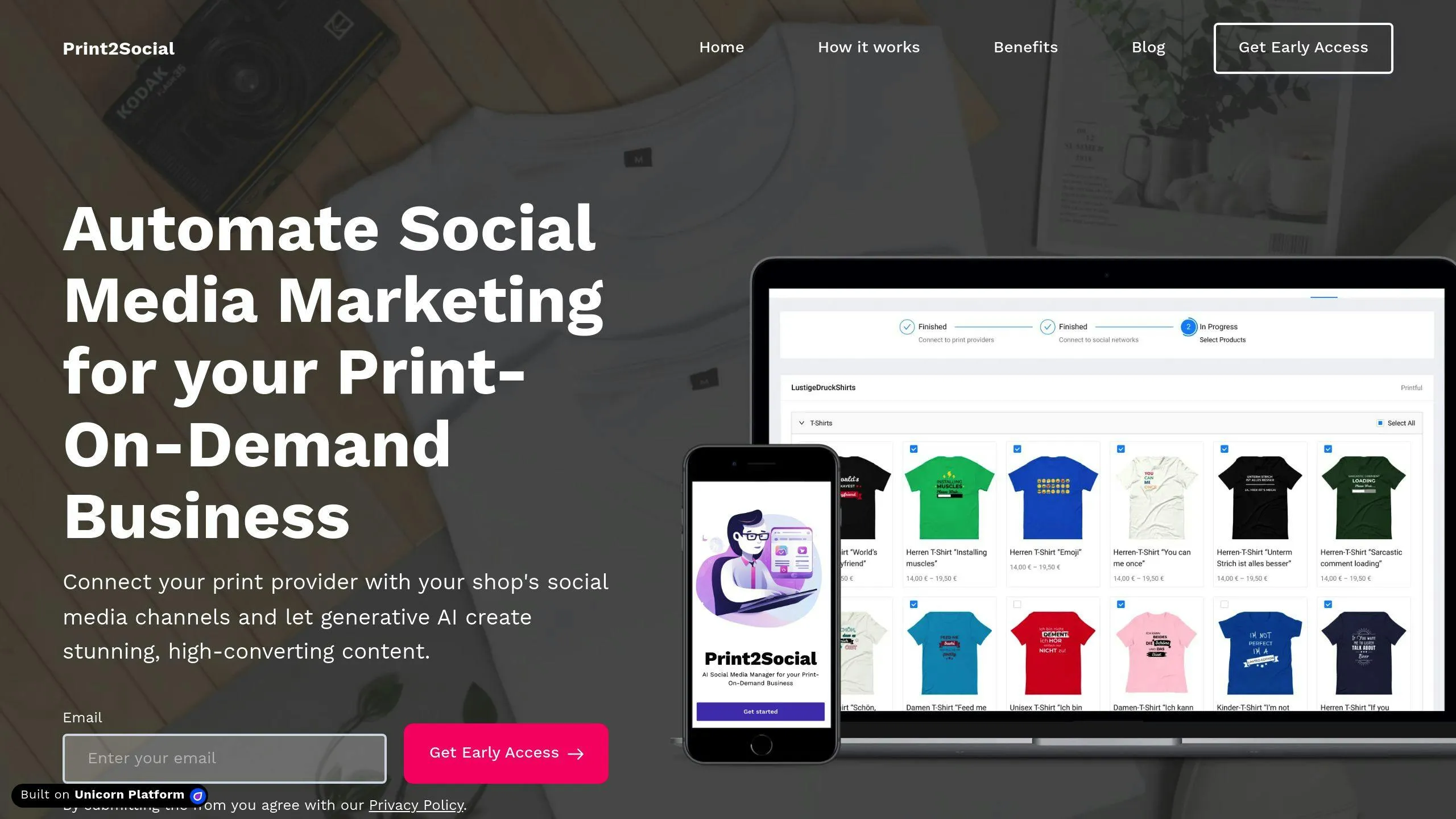
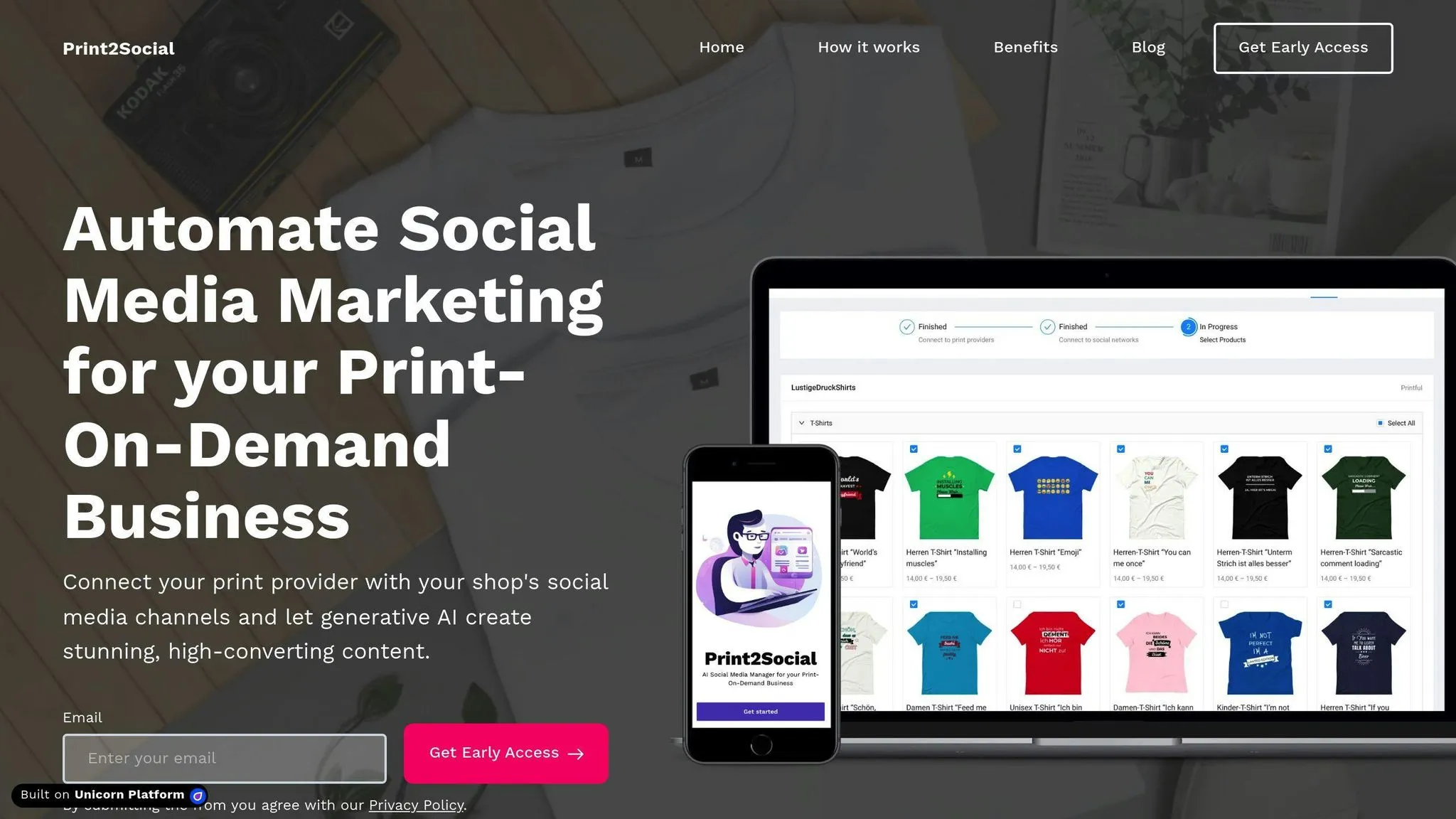
Print2Social connects directly with POD platforms to streamline the creation of product-focused social media content. It offers AI-generated visuals, videos, and scheduling features, making it easier to manage your brand’s online presence.

Not all AI tools are built the same when it comes to storytelling for POD. Here’s a quick comparison:

Tool

POD Integration

Visual Generation

Content Automation

Print2Social

Full platform support

Images and videos

Yes

Adobe Sensei

Limited

Advanced visuals

Yes

Wondr AI

Yes

Yes

Yes

Each tool offers unique strengths, but the ability to create engaging, data-informed narratives is essential for POD businesses.

“Generative AI revolutionizes brand storytelling by using data and machine learning to create high-quality narratives in seconds.” [1]

Ultimately, the best tool will depend on your specific needs and storytelling objectives.

For POD (Print-On-Demand) businesses, where variety and customization are central, tools like ChatGPT and Jasper AI can help shape stories that emphasize unique designs while staying in tune with customer preferences [1]. By analyzing customer feedback and market trends, AI pinpoints key brand elements that resonate with your target audience.

Here’s how AI can assist in brand storytelling:

Brand Element

AI Application

Business Impact

Brand Identity

Sentiment analysis, AI content guides

Consistent and clear messaging

Visual Identity

Style transfer algorithms

Unified and appealing aesthetics

Once your brand’s identity is clearly mapped out, the next step is to bring it to life with creative, AI-driven content.

AI tools like DALL-E and Jasper AI can create custom visuals and copy tailored specifically for POD products [4][5]. Platforms like Print2Social streamline this process by automating social media posts with AI-generated visuals and videos, making content creation much easier for busy businesses.

AI shines when it comes to understanding customer behavior and crafting targeted content. Tools like PrintJourney analyze data to optimize content for specific customer segments, ensuring it remains relevant and engaging [4][2].

Here are some ways to target different groups:

Audience Segment

AI Application

Content Focus

Customer Segments

Predictive analytics, purchase history

Introductory and loyalty content

Social Followers

Engagement patterns

Platform-specific visuals

The key to successful AI storytelling is blending automation with your brand’s personality. Use AI to enhance your natural voice, not replace it. This ensures your POD business stays connected to its audience while reaping the benefits of AI’s speed and scalability.

Using AI Brand Storytelling on Social Media

Section titled “Using AI Brand Storytelling on Social Media”

Once you’ve nailed down your brand story, the next step is using AI to share it effectively across social media platforms.

AI-powered tools have transformed how POD (Print-on-Demand) businesses handle their social media presence. Tools like Print2Social, mentioned earlier, automate content creation and scheduling, integrating effortlessly with POD platforms to simplify workflows. These tools save time and effort on manual tasks, letting businesses focus on big-picture planning.

Automation Aspect

AI Capability

Business Impact

Content Creation

Generates product mockups and promotional videos

Saves time and cuts costs

Post Scheduling

Automates timing based on audience activity

Boosts engagement opportunities

Platform Integration

Links with major POD providers and social platforms

Simplifies workflow management

Refining Social Media Strategies with AI Insights

Section titled “Refining Social Media Strategies with AI Insights”

AI analytics tools give businesses a deep dive into how their social media content performs. By tracking metrics like likes, comments, and shares, businesses can see what resonates with their audience. These tools also help identify top-performing posts, allowing businesses to fine-tune posting schedules and social strategies.

This data-driven approach ensures businesses can adapt and create content that connects with their audience. It’s all about understanding what works and doubling down on it.

Expanding Reach with AI-Generated Visuals and Videos

Section titled “Expanding Reach with AI-Generated Visuals and Videos”

AI tools can craft visuals tailored for social platforms, showcasing products in engaging, shareable formats. These visuals and videos not only grab attention but also maintain consistent storytelling across all platforms, reinforcing your brand’s identity.

Content Type

AI Application & Benefits

Product Mockups

Places products in lifestyle settings for eye-catching visuals

Video Content

Auto-generated promotional clips to drive engagement

Social Media Posts

Pre-made templates for cohesive, branded content

The real trick is finding the right balance between automation and authenticity. While AI can handle tasks like content creation and scheduling, your brand voice needs to stay true and relatable. Regularly reviewing and tweaking AI-generated content ensures you hit the mark while maximizing your social media impact.

Section titled “Best Practices and Trends in AI Brand Storytelling for POD”

To build trust with your audience, it’s crucial to be transparent about using AI in your content creation. Ethical practices ensure your brand stories connect with people and maintain credibility.

Ethical Aspect

Implementation Strategy

Business Impact

Transparency & Bias Prevention

Clearly label AI-generated content, use diverse datasets

Builds trust and promotes inclusivity

Content Accuracy

Regularly review AI outputs with human oversight

Protects brand credibility

By addressing these ethical issues, businesses can establish stronger connections with their audience while staying competitive.

AI is reshaping how print-on-demand (POD) brands engage with their customers through interactive and tailored content.

Trend

Application

Impact on POD Business

Real-time Content Adaptation

Adjusts messaging based on user interactions

Boosts content performance

Interactive Storytelling

Creates dynamic and engaging product showcases

Drives customer engagement

Dynamic Ad Personalization

Customizes ads to individual preferences

Improves conversion rates

By tapping into these advancements, POD brands can create more engaging and effective content.

To make the most of AI tools, focus on integrating them into your workflow while keeping your brand’s voice intact.

Success Factor

Implementation Guide

Expected Outcome

Tool Integration & Training

Select AI tools that align with POD operations and train staff

Streamlined workflows

Content Review

Regularly evaluate AI-generated content for quality

Ensures consistent messaging

Research shows that 61% of employees experience greater productivity when using AI tools in their work [2]. This highlights the importance of treating AI as a collaborative resource rather than a full replacement for human creativity.

When using AI for storytelling, consider these steps:

  • Start with small, manageable automation tasks.
  • Track how your content performs with metrics.
  • Update AI prompts based on audience feedback and engagement.
  • Keep human oversight to maintain your brand’s authenticity.

Balancing automation with a personal touch is key. By applying these strategies and staying aware of the latest trends, POD businesses can craft stories that truly connect with their audience.

AI-driven storytelling is changing the game for POD businesses, making it easier to create personalized, engaging content at scale. By integrating AI tools into their processes, brands can better connect with audiences while keeping their messaging genuine.

Impact Area

Key Advantage

Business Outcome

Content Creation

Automated, tailored narratives

Stronger brand engagement

Operational Efficiency

Simplified workflows

Lower operational costs

Marketing Reach

Data-informed content delivery

Better audience targeting

“Gen AI is not a replacement for human creativity in branding. It’s a co-creator that allows marketing managers and teams to create more immersive, hyper-personalized stories by tapping into AI’s data-driven knowledge about your brand and its audience” [1].

To succeed with AI-powered brand storytelling, businesses need to combine tech with genuine, relatable messaging. Tools like Print2Social make this possible by automating social media management while keeping the brand voice intact.

Phase

Action Items

Expected Results

Planning & Setup

Set clear goals and pick the right tools

Better engagement metrics

Execution & Analysis

Use automation and monitor performance

A more consistent brand identity

Here’s how to get started:

  • Set clear objectives and choose AI tools that align with your brand’s needs.
  • Automate content creation, analyze metrics, and adjust strategies based on insights.

POD storytelling works best when AI and human creativity come together. Generative AI can help produce visual content and automate social media, enabling brands to deliver personalized, engaging experiences. By taking these steps, POD businesses can stay competitive and craft stories that truly connect with their audience [1][2].

Here are answers to some common questions to help POD businesses make the most of AI tools for social media content creation.

Is there an AI that creates social media posts?

Section titled “Is there an AI that creates social media posts?”

Yes, there are several AI tools designed to create social media posts, especially for POD businesses. For example, Print2Social integrates with POD providers to automate content creation and scheduling. Another option is SocialPilot, which supports content creation across multiple social platforms [6].

Which AI tool is best for social media content writing?

Section titled “Which AI tool is best for social media content writing?”

The ideal AI tool depends on the specific needs of your POD business. Below is a comparison of some popular options:

Tool

Key Features

Best For

Print2Social

Automated product showcasing, content scheduling, design templates

POD businesses wanting a smooth product-to-post setup

Sprinklr

Advanced curation, multi-platform management, detailed analytics

Larger POD operations needing enterprise-level insights

Hookle

Easy content generation, simple posting tools, basic analytics

Smaller POD businesses new to AI-driven automation

These tools cater to different business sizes and goals, offering features like automated workflows and in-depth analytics [4][2].

As AI tools improve, they can help businesses not only create content but also enhance storytelling to keep up with changing trends.
How AI Enhances POD Customer Experience

AI is transforming the print-on-demand (POD) industry by improving customer experiences in key areas:

  • Personalized Recommendations: AI analyzes customer preferences to suggest products and designs tailored to individual tastes.
  • Real-Time Previews: Customers can view and adjust product designs instantly, reducing uncertainty and boosting confidence.
  • AI Chatbots: Automated 24/7 support handles up to 70% of routine inquiries, ensuring quick responses and lower support costs.
  • Social Media Automation: Tools like Print2Social streamline content creation, scheduling, and engagement for POD businesses.

These advancements not only simplify processes but also make shopping more interactive and efficient. Dive in to explore how AI is reshaping the POD landscape.

Creating Personalized Shopping Experiences with AI Chatbots

Section titled “Creating Personalized Shopping Experiences with AI Chatbots”

AI is reshaping the print-on-demand (POD) industry by delivering personalized experiences tailored to individual customers. By analyzing browsing habits and purchase data, AI identifies patterns to suggest designs that align with customer preferences.

AI tools can do some incredible things, such as:

  • Create custom artwork and adjust designs to suit various product types based on user preferences.
  • Highlight trending color palettes.
  • Recommend products that complement previous purchases.

These tools get even better over time, learning from customer interactions to refine their suggestions. Beyond design recommendations, AI also boosts engagement with interactive visualization features.

Real-time previews powered by AI have changed the game for POD products, offering customers a more interactive experience.

Preview Feature

Customer Benefit

Real-time visualization

Immediate feedback and easy design adjustments

Multi-angle product views

Clearer understanding of the final product

Accurate scaling

Realistic expectations for product size

This technology helps eliminate doubts during the shopping process, making customers more confident in their purchases and reducing dissatisfaction.

AI chatbots are essential for delivering smooth customer service, handling everything from initial questions to post-purchase support. They can:

  • Suggest products and assist with design choices.
  • Provide real-time updates on orders and customization options.

By leveraging customer interaction history, these chatbots offer faster, more tailored assistance. This automation allows businesses to maintain excellent service levels while keeping support costs manageable.

“AI algorithms analyze customer preferences, browsing history, and purchase patterns to offer tailored design recommendations in print-on-demand (POD), significantly enhancing the overall customer experience”

AI has transformed customer support in the print-on-demand (POD) industry, making operations more efficient and improving service quality. By automating key tasks, POD businesses can provide consistent support while using their resources more effectively.

AI systems excel at managing routine customer inquiries, saving valuable time for support teams. These platforms can handle multiple questions at once, offering instant answers on topics like order status, product details, return policies, and shipping information. This ensures quick and accurate responses without delay.

AI chatbots ensure customers receive immediate assistance any time of the day, regardless of time zones. They are particularly useful during busy periods and offer several advantages:

  • Understand customer intent in multiple languages, ensuring accurate responses
  • Maintain consistent service quality across all interactions
  • Handle increased support demands without extra costs

For POD businesses with global customers, 24/7 availability is crucial. AI-powered support ensures faster resolutions, leading to a smoother and more enjoyable shopping experience.

“A POD business that implemented an AI-powered chatbot reported a 30% reduction in customer support costs”

AI helps businesses cut support costs by up to 30%. It reduces the need for extensive training and allows teams to focus on more complex customer issues. This dual benefit of cost savings and improved efficiency makes AI automation a smart choice for modern POD businesses.

AI’s role isn’t limited to customer support - it also helps streamline other areas, such as managing social media for POD companies.

Social media marketing is a game-changer for print-on-demand (POD) businesses, helping them connect with customers and grow their reach. AI takes this a step further by automating tasks, saving time, and boosting customer interaction.

Print2Social bridges the gap between POD services and social media platforms. It automates content creation and scheduling, ensuring businesses maintain a steady online presence without the hassle.

Print2Social

Feature

What It Does

Product Integration

Pulls product details directly from POD platforms

AI Content Generation

Creates posts using product images and designs

Automated Scheduling

Keeps posts regular across various platforms

Customizable Content

Adapts posts to align with your brand identity

Multi-Platform Support

Works with major social media networks

These tools make managing social media easier while boosting customer interaction, giving POD businesses a strong edge.

Using tools like Print2Social, automation turns social media management into a smart, time-saving strategy. Regular posting keeps customers engaged while freeing up time for other business needs.

“AI enhances the customer experience by providing personalized and timely content, improving engagement, and ensuring consistent brand messaging across social media platforms.”

AI also helps tailor posts to match customer preferences, building trust and loyalty. With platforms like Print2Social, businesses can create content that truly connects with their audience. As AI evolves, expect even better tools for content creation, analytics, and audience engagement.

AI has reshaped the print-on-demand (POD) industry by automating tasks, creating personalized experiences, and boosting customer engagement. This shift has brought efficiency to operations while ensuring consistent quality across products. Its impact is particularly evident in three areas: customer interactions, support systems, and marketing strategies.

AI’s influence on POD is far from over. Emerging technologies promise to push the boundaries even further, offering exciting possibilities for growth and efficiency.

“The growing importance of AI in POD cannot be overstated, as it optimizes data collection, enables 24/7 availability, improves efficiency, and elevates the overall customer experience.”

Conversational AI is advancing rapidly, enabling more natural and intuitive customer service. These systems are becoming better at understanding and addressing individual needs, making interactions smoother and more effective. Combined with other AI advancements, they aim to create a frictionless experience for customers.

Future AI Development

Impact on POD

AI-Driven Production and Design

Quicker delivery and real-time trend responsiveness

Advanced Conversational AI

Tailored and lifelike customer interactions

Automated Quality Assurance

Uniform product quality with minimal errors

As AI tools continue to evolve, POD businesses will gain access to more advanced solutions that blend automation with the personal touch customers expect. The key to thriving in this space will be in using these tools thoughtfully, ensuring they strengthen customer relationships and preserve brand authenticity.

AI in POD: Personalizing Customer Support

AI is transforming customer support for print-on-demand (POD) businesses by offering fast, personalized, and cost-effective solutions. Here’s how:

  • 24/7 Support: AI chatbots handle customer queries anytime, reducing the need for large support teams.
  • Personalized Recommendations: AI analyzes customer behavior to suggest products tailored to individual preferences.
  • Cost Savings: Automation cuts expenses by managing most interactions without human agents.
  • Improved Efficiency: AI learns from feedback to refine responses and handle complex POD-specific issues like custom orders.

These tools also integrate with social media platforms, enabling businesses to streamline operations and enhance customer engagement. AI is helping POD businesses deliver better service while saving time and money.

AI Customer Service Demo Chatbot Customer Support AI Automation

Section titled “AI Customer Service Demo Chatbot Customer Support AI Automation”

Why AI is Useful for Customer Support in POD

Section titled “Why AI is Useful for Customer Support in POD”

The print-on-demand (POD) industry comes with its own set of customer service challenges, thanks to the customizable nature of products and the complexity of fulfillment processes. AI technology has become a powerful tool for improving customer support in this space.

AI chatbots are excellent at delivering 24/7 customer service without the expense of staffing multiple shifts. Research from Gooten highlights that these chatbots can efficiently handle routine questions about order tracking, product details, and basic troubleshooting needs. Beyond just being available at all times, AI also enhances the experience by offering tailored recommendations.

AI analyzes customer data - like purchase history, browsing habits, and design preferences - to suggest products that align with individual tastes. Studies indicate that this level of personalization improves the shopping experience by providing highly relevant product matches.

AI drastically reduces customer support expenses by eliminating the need for large support teams, constant training, and additional pay for after-hours services. It can handle multiple queries simultaneously, making it incredibly efficient. Experts predict that by 2025, AI will manage over 95% of customer interactions. This not only lowers costs but also ensures interactions remain high-quality and personalized.

For POD businesses, AI’s ability to address questions about custom designs, printing details, and order changes makes it especially effective in meeting customer needs while keeping operations streamlined.

Start by focusing on platform compatibility and how well the AI tool integrates with your existing print-on-demand (POD) systems. Look for tools that use natural language processing (NLP) to understand and respond accurately to customer questions. The ideal tool should support multiple languages, handle complex customization requests, sync with your product catalog, and grow alongside your business.

To provide personalized service, your AI system needs secure access to your customer data. Set up API connections between your customer database and the AI platform to allow access to key details like:

  • Purchase history
  • Design preferences
  • Past support interactions
  • Product browsing habits

These insights enable the AI to deliver tailored responses and improve the customer experience.

Set up your chatbot to handle frequently asked questions, such as:

  • Order status (using order tracking integration)
  • Design requirements (with access to product specifications)
  • Shipping details (linked to carrier APIs)
  • Customization options (connected to design preview tools)

Use historical data to fine-tune the chatbot’s responses, especially for POD-specific situations. Regularly monitor performance and make adjustments. Ensure that complex issues are flagged automatically and handed off to human agents without delay. Incorporate customer feedback to keep improving how the AI responds.

After setting up your AI-powered support, consider expanding its role by integrating it into your social media strategy for even greater customer engagement.

Print2Social

AI tools like Print2Social go beyond customer support by helping businesses manage their social media presence effectively. With its AI-driven approach, Print2Social enhances your POD (Print on Demand) strategy by integrating social media management with customer support systems.

Creating and Scheduling Social Media Content

Section titled “Creating and Scheduling Social Media Content”

Print2Social simplifies the process of creating and scheduling social media posts. Its AI engine generates promotional content directly from your POD product catalog, including custom images and videos that showcase your designs.

Here’s what it offers:

  • Automated post creation using your product catalog
  • AI-generated visuals (images and videos) featuring your products
  • Smart scheduling tools to keep your social media active
  • Customizable content to align with your brand’s tone and style

By connecting with your POD provider, Print2Social ensures your promotional posts stay up-to-date with your latest products, allowing your team to focus on other tasks.

Print2Social bridges the gap between your POD store and social media platforms, ensuring consistent messaging and branding across all channels. This is crucial for delivering a unified experience to your audience.

Key features include:

  • Direct product data syncing from your POD provider
  • Real-time inventory updates to avoid promoting unavailable items
  • Content optimization based on engagement insights to improve performance

This integration not only strengthens your social media strategy but also ensures your brand stays consistent and reliable across every platform.

How AI Can Improve Customer Support in POD

Section titled “How AI Can Improve Customer Support in POD”

AI has reshaped how POD businesses handle customer support, making it more efficient, tailored to individual needs, and cost-efficient. By leveraging customer data and automating repetitive tasks, companies can provide better service while using resources wisely.

AI offers around-the-clock support, tailored recommendations, and streamlined operations - benefits that are hard to ignore for POD businesses . With tools like Print2Social, businesses can integrate AI into social media, ensuring a seamless customer experience across different platforms. Additionally, analyzing data and automating processes allow companies to boost customer satisfaction while cutting costs .

To make the most of AI in your POD business:

  • Train your team to understand and work with AI tools effectively.
  • Regularly monitor and evaluate performance metrics to identify areas for improvement.
  • Use customer feedback to refine and update AI systems over time.

How can AI personalize customer interactions?

Section titled “How can AI personalize customer interactions?”

AI helps POD businesses personalize customer interactions by analyzing data such as browsing habits and purchase history. This allows for smarter product suggestions, customized chatbot replies, and content tailored to individual preferences .

For POD businesses, where customization is key, AI shines in three main areas:

  • Smart Product Suggestions: By studying past purchases and browsing patterns, AI can recommend products and designs that align with each customer’s tastes .
  • Customized Customer Support: AI-powered chatbots use data like order history to provide fast, accurate, and conversational assistance tailored to the customer.
  • Targeted Content Delivery: Platforms like Print2Social use AI to adjust social media posts based on customer engagement, ensuring marketing efforts hit the mark.

AI’s ability to personalize improves over time as it learns from customer interactions and feedback, making it even better at meeting the unique needs of POD businesses .

5 Ways User Content Boosts POD Sales

User-generated content (UGC) is a powerful tool for print-on-demand (POD) businesses to increase sales and build trust. Why? Because potential buyers trust real customer experiences more than ads. This article breaks down 5 actionable strategies to use UGC effectively:

  • Encourage Social Sharing: Ask customers to post photos or videos of your products with branded hashtags. Offer rewards like discounts.
  • Leverage AI Tools: Use platforms like Print2Social to automate content creation, scheduling, and performance tracking.
  • Showcase Customer Reviews: Display reviews on product pages and social media, especially those with photos.
  • Run UGC Campaigns: Host contests or offer incentives to collect more customer photos and videos.
  • Integrate UGC into Your Schedule: Regularly post customer content alongside promotional material for a relatable brand image.

Why it works: UGC builds trust, boosts engagement, and drives sales by showing authentic customer satisfaction. Start small with reviews or campaigns, and track results to refine your approach.

User-Generated Content: Your Secret Weapon for Building Trust & Attracting New Customers

Section titled “User-Generated Content: Your Secret Weapon for Building Trust & Attracting New Customers”

Encouraging your customers to share their experiences with your POD products on social media can be a game-changer for sales. When people see real customers using your products, it builds trust and nudges potential buyers toward making a purchase.

Make Sharing Easy and Rewarding Include a card with each order that offers a simple incentive, like: “Share your [product] with #YourBrand and get 15% off your next order!” A clear call-to-action like this makes participation effortless.

Encourage Variety in Content Motivate customers to create different types of content, such as photos, unboxing videos, or stories. This variety keeps your brand’s social presence engaging and relatable.

Provide Simple Guidelines Share quick tips or examples to help customers create content that feels genuine while aligning with your brand’s image.

Monitor and Measure Impact Use tools like Print2Social to track the performance of user-generated content (UGC). Keep an eye on metrics like engagement, sales, and click-through rates to see what’s working [1].

For instance, Solgaard, a travel brand, highlights customer photos and reviews directly on their product pages. This approach not only boosts engagement but also builds trust with potential buyers [2].

Getting customers to share is just the first step - how you manage and showcase that content can make all the difference.

2. Use AI Tools to Manage Social Media Content

Section titled “2. Use AI Tools to Manage Social Media Content”

AI tools simplify how POD businesses use user-generated content (UGC) on social platforms. For example, Print2Social automates the process by pulling from your POD catalog to create and schedule a variety of posts. It generates images and videos that display products in different settings, making your social media more dynamic.

Content Creation and Management
AI tools can produce a mix of content, such as lifestyle images, flat lays, product highlights, and short videos. They also integrate UGC into the mix, blending professional-looking posts with real customer experiences to create a polished yet relatable brand image.

Automated Workflow
These tools directly connect with POD providers to make content creation and scheduling effortless. They handle tasks like:

  • Pulling product details from your POD catalog
  • Generating diverse posts for social media
  • Scheduling posts at the best times
  • Monitoring performance metrics

Performance Tracking
AI tools can measure engagement, conversions, and audience growth, giving you insights into how well UGC performs. This data helps you pinpoint what resonates with your audience, so you can adjust your strategy as needed.

Seamless Integration
Combining UGC with AI-generated content allows businesses to highlight genuine customer experiences while maintaining a consistent and polished social media presence. This automated system ensures your UGC is presented in the most engaging formats, reaching your audience effectively.

Customer reviews are a powerful form of user-generated content for print-on-demand (POD) businesses. Seeing feedback from real buyers can boost a potential customer’s confidence and make them more likely to click “buy.”

Where to Showcase Reviews
Place reviews where they’ll have the most impact - on product pages, a dedicated testimonials section, and even on social media. Make it easy for customers to leave feedback by providing simple review forms they can access quickly.

Add Photos for Extra Impact
Ask customers to include photos with their reviews. Visual proof of your product’s quality, like what brands such as Solgaard have done, can make reviews even more persuasive. Combining written feedback with images builds strong social proof.

Tips for Managing Reviews

  • Send follow-up emails or offer small perks to encourage customers to leave detailed reviews with photos.
  • Always respond to reviews quickly and professionally - this shows you value customer input.
  • Turn glowing reviews into eye-catching social media posts using tools like Print2Social.

Measure the Impact of Reviews
Keep track of these key metrics to understand how reviews affect your business:

Metric

What to Watch

Review Rating

Trends in overall star ratings

Conversion Rates

Sales from products with reviews compared to those without

Response Rate

How many customers leave reviews after purchase

Photo Reviews

The number of reviews that include customer-uploaded images

When combined with other user-generated content like photos and videos, reviews can help build trust and credibility. By repurposing them across various platforms, you can extend their reach and effectiveness. Next, let’s look at how campaigns can help you gather even more customer content.

Running targeted campaigns is a great way to collect user-generated content while creating buzz around your brand. These campaigns can bring in fresh content, drive traffic, and even boost your sales.

Plan Campaigns That Work
Set up contests with clear rules, appealing rewards, and easy steps to join. For example, host a monthly photo contest where customers share pictures of themselves using your products, like custom t-shirts. Provide clear instructions and examples to guide participants and ensure submissions meet your expectations.

Offer Rewards That Motivate
Encourage participation by offering rewards that matter to your audience. Think discounts for photo submissions, free products for contest winners, or even early access to new designs for your most engaged contributors.

Use Platforms Wisely
Customize your campaigns for each platform. Instagram is great for eye-catching product photos, while Facebook works well for contests that bring your community together. Tools like Print2Social can help you schedule campaigns and keep your messaging consistent.

Measure and Improve
Keep an eye on key metrics to see how your campaigns are doing and make adjustments as needed:

  • Submission rates
  • Engagement on shared content
  • Conversion rates from campaign traffic
  • Quality of user-generated content

Once you’ve gathered strong user content, start weaving it into your regular posts to amplify its impact.

5. Add User Content to Your Posting Schedule

Section titled “5. Add User Content to Your Posting Schedule”

Including user-generated content (UGC) in your social media plan can help build trust and boost engagement. In fact, UGC is shown to be twice as effective as traditional ads [2].

Mix It Up
Incorporate UGC into your posts to keep your content fresh and relatable. Use a variety of formats like customer photos, reviews, or unboxing videos to make your feed more engaging.

Simplify the Process
Balancing UGC with promotional posts can take time. Tools like Print2Social help streamline the scheduling process, making it easier to maintain a consistent posting schedule.

Highlight Real Stories
Brands such as Solgaard and Aloha have seen better conversion rates by featuring UGC in their social media. They’ve also encouraged more submissions by offering incentives [2].

Measure Results
To refine your UGC strategy, keep an eye on these metrics:

Metric

What to Track

Engagement Rate

Likes, comments, and shares on UGC

Conversion Rate

Sales tied to posts with UGC

User-generated content (UGC) has shown to be a game-changer for print-on-demand (POD) businesses, delivering twice the impact of traditional advertising by showcasing genuine customer experiences [3]. By using strategies like social media sharing, AI tools, customer reviews, targeted campaigns, and well-planned scheduling, POD businesses can tap into the full power of UGC.

Why It Matters
Customer reviews and social proof are now critical in building trust, especially in today’s competitive landscape. Incorporating UGC into marketing plans has proven effective in influencing buying decisions and increasing conversion rates [3]. This approach not only makes your brand more relatable but also drives measurable growth.

How to Make It Work
To get the most out of UGC, focus on these key areas:

Area of Focus

Steps to Take

Content Balance

Mix customer-generated content with promotional materials

Tracking Success

Monitor engagement and sales metrics

Growth

Expand UGC efforts based on what performs well

Next Steps
Start small - whether it’s encouraging customer reviews, running a UGC campaign, or weaving customer stories into your content. With steady effort and smart execution, UGC can help your POD business stand out as a trusted and engaging brand that connects with your audience.

Social proof leverages customer experiences to influence buying decisions by highlighting trust and reliability. In the print-on-demand (POD) industry, it appears in various forms of user-generated content, showcasing customer satisfaction and product quality.

Here’s a quick look at how different types of social proof can boost POD sales:

Type of Social Proof

How It Helps Sales

Influencer Endorsements

Targets specific audiences with trusted voices

Expert Reviews

Offers professional approval of product quality

Community Engagement

Highlights an active and supportive brand culture

Purchase Statistics

Shows product demand and popularity

Social proof resonates with buyers because it feels relatable and genuine. Seeing others enjoy a product often encourages potential customers to follow suit.

Why Social Proof Matters for POD:

  • Builds trust and strengthens brand reputation
  • Increases buyer confidence and eases decision-making
  • Encourages organic growth through referrals
  • Makes marketing efforts more impactful

POD businesses should actively gather and share real customer stories across platforms. Tools like Print2Social can simplify this process by linking your POD store to social media, making it easier to showcase social proof.

User Content Trends in POD 2024

Want to boost your print-on-demand (POD) business in 2024? User-generated content (UGC) is your answer. Here’s why it matters and how to use it:

  • Trust Factor: 84% of consumers trust brands more when they see UGC, and 77% say it influences their buying decisions.
  • What’s Working in 2024:
    • Raw Content Wins: People prefer real, unpolished posts from actual customers.
    • Shoppable UGC: Platforms like Instagram and TikTok let users buy directly from posts.
    • Video Dominates: Videos are shared 1200% more than text and images combined.
    • AR Tools: Augmented reality helps customers preview products, driving more purchases.
    • AI Tools: Tools like Print2Social save time by automating UGC management and content creation.

Quick Tip: Engage customers with campaigns like photo contests or hashtags (e.g., #MyMorningMug). Offer discounts or spotlight their content to build loyalty and boost sales.

Want to learn more? Dive into the full guide for strategies, tools, and examples to grow your POD business with UGC.

People want to see REAL stuff from REAL people. That’s what drives user-generated content (UGC) today. For print-on-demand (POD) businesses, this means showing actual customers using their products in everyday life, not just perfect studio shots.

The numbers back this up. When brands use UGC in their marketing, they see better sales and more loyal customers. Take TeeSpring - they feature photos from their creators using custom merch on their website and social media. It works because it shows real people loving real products.

Here’s a cool example: A custom mug company started #MyMorningMug, asking customers to share photos of their mugs during their morning routines. The results? A 32% boost in social media engagement and more customers coming back to buy again.

Want to make this work for your POD business? Get your customers involved. Offer rewards for sharing their stories and photos. Put their content front and center on your platforms. It builds trust and makes your community stronger.

Picture this: Someone sees a cool product in a social media post and can buy it right then and there. That’s shoppable UGC, and it’s changing how POD businesses sell online.

Instagram and TikTok are leading this charge. One POD brand selling custom phone cases tried TikTok’s shopping features, linking customer videos directly to their products. The results were impressive: 40% more clicks and 25% higher sales in just three months.

Tools like Print2Social make this easier for POD businesses. It connects to your POD suppliers, grabs product info, and helps create posts that sell. It’s like having a marketing assistant who never sleeps.

Let’s face it - photos and videos rule social media. For POD businesses, this is great news because your products are meant to be seen. Here’s something wild: Videos get shared 1200% more than text and images combined.

Think about it - whether you’re selling custom t-shirts or personalized wall art, showing them in action tells a better story. One POD brand asked travelers to share videos with their custom journals. Not only did it boost engagement, but it also made them THE brand for travel lovers.

AR (augmented reality) is taking this even further. A POD home decor brand let customers see how custom prints would look on their walls before buying. Smart move - it led to 15% more purchases and tons of customers sharing their AR try-ons online.

The takeaway? Focus on great visuals and try new tech like AR. When customers share their own photos and videos, it spreads your message and builds real connections.

AR technology is changing how customers experience print-on-demand (POD) products before buying. It’s becoming a key driver for user-generated content (UGC) by letting shoppers see products in their space. Picture this: A POD home decor company lets customers preview wall art in their living rooms through their phones. People got so excited about this feature that they started posting their AR preview shots all over social media.

The same magic happens with clothing and accessories. When a POD t-shirt shop adds AR try-ons, customers can see how designs look on them before buying. This fun, interactive element gets people sharing their virtual fitting room moments online - it’s like having a fashion show right on your phone!

Want to get more customers sharing content about your products? Mix smart rewards with a dash of spotlight moments. One POD company selling custom tote bags nailed this approach with their #MyToteStory campaign - customers who shared photos got a 10% discount on their next order.

But it’s not just about discounts. People love being featured by brands they support. Try running a “Customer Spotlight” where you showcase the best customer photos and stories each month on your social channels. It’s like creating a mini-fame moment for your customers while building a stronger community around your brand.

AI tools are making it easier to handle UGC at scale while keeping things personal. Take Print2Social - it’s like having a marketing assistant that connects with your POD suppliers, creates promo content, and manages your social media posts automatically.

Here’s how to put AI to work in your UGC strategy:

  • Let AI tools collect and sort through social posts, reviews, and customer content to find the gems
  • Use platforms like Print2Social to create custom posts that mix your designs with customer content
  • Time your posts perfectly using AI-powered scheduling

The key is finding the sweet spot between automation and keeping that human touch your customers love. When done right, AI helps you share more authentic customer stories while saving time on the technical stuff.

Print2Social

Running a print-on-demand (POD) business? You know how tough it is to keep up with user-generated content (UGC). From sorting through customer photos to posting on social media, it can eat up your whole day. That’s where Print2Social comes in - it’s an AI tool that makes UGC management a breeze, giving you more time to grow your business.

Features of Print2Social for UGC Management

Section titled “Features of Print2Social for UGC Management”

Print2Social works hand-in-hand with POD providers to keep your campaigns fresh with the latest designs. The platform uses AI to whip up eye-catching UGC and handles your social media posting schedule. No more late nights trying to plan your content calendar!

“Print2Social enables POD businesses to prioritize creativity and engagement by automating content management”, explains Samir Alibabic, founder of Print2Social.

Want proof it works? One small POD business selling custom phone cases saw their social media engagement jump by 40% in just three months after starting with Print2Social. That’s what happens when you let automation do the heavy lifting.

Let’s break down why automation beats the old-school way of managing UGC. Here’s what Print2Social brings to the table compared to doing everything by hand:

Aspect

Manual Management

Automated with Print2Social

Time

Hours spent on content creation and scheduling

Quick setup, then runs on autopilot

Growth

Hard to handle more content as you grow

Handles any amount of content with ease

Budget

Need to hire help or outsource work

Cut costs with automated tasks

Posting

Often miss posts or post at odd hours

Posts right on schedule, every time

Content

Limited by your time and energy

Fresh AI-generated content daily

Picture this: Without automation, you might spend your Sunday nights planning social posts and editing photos. With Print2Social, those tasks happen automatically while you focus on what matters - connecting with customers and making your products better.

Conclusion: Using UGC to Grow POD Businesses in 2024

Section titled “Conclusion: Using UGC to Grow POD Businesses in 2024”

User-generated content (UGC) isn’t just another marketing trend - it’s a proven way to boost your print-on-demand (POD) business. The numbers tell the story: 84% of consumers trust brands that use UGC, and 77% say it affects their buying choices. When you combine real customer content with tools like Print2Social, you’re setting yourself up for success.

Here’s what’s working RIGHT NOW for POD businesses:

Get Real Customer Content Take a page from Threadsy’s playbook - their #MyThreadsy campaign on Instagram offered a simple 15% discount for posts. Result? Over 1,200 tagged posts in just two months. People love sharing their experiences, especially when you make it worth their while.

Work Smarter with AI A small POD mug business tried something different: they used Print2Social to create AI-powered product videos featuring customer reviews. This move cut their campaign work by 10 hours every week and bumped up engagement by 40%. That’s what we call working smarter, not harder.

Keep It Real According to a 2024 Nosto study, UGC hits 9.8 times harder than influencer content. Why? Because people trust other regular customers more than polished influencer posts. Show your products in real life, being used by real people.

Make Buying Easy One POD business added shopping tags to their Instagram UGC posts and saw sales jump by 25%. The lesson? Make it simple for people to buy what they see.

Watch What Works Pay attention to which content gets the most attention. If your customers engage more with videos than photos, that’s your cue to create more video content.